Chronic low back pain
Treating and relieving persistent low back pain with an osteopath in Paris 16
Care provided by Charbel Kortbawi, osteopath in Paris 16, at Cabinet Victor Hugo — 7 rue Georges Ville (75016).
What is chronic low back pain?
Definition and characteristics
Chronic low back pain refers to persistent pain located in the lumbar region (i.e. the lower back) that has lasted for more than three months. As an osteopath in Paris 16, this condition is one of the main reasons for consultation for chronic back pain. It affects a large proportion of the world’s population, 8 to 10% of the French population, and is one of the leading causes of disability, absence from work and reduced quality of life. Low back pain can be mechanical in origin, linked to alterations of the spine and surrounding structures, or non-mechanical, with more complex causes such as inflammatory or metabolic diseases.
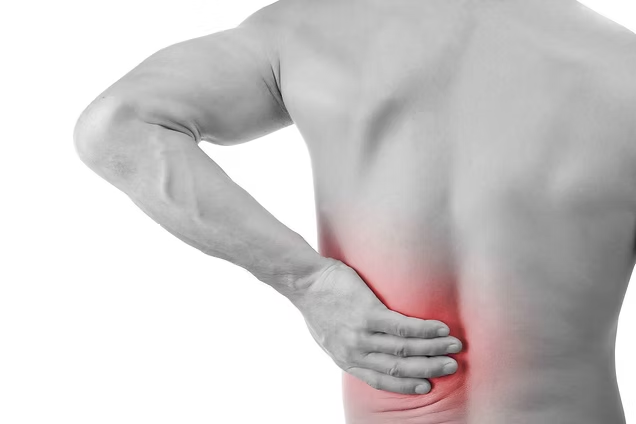
Causes of chronic low back pain
Mechanical factors
The most common: postural disorders, lumbar osteoarthritis, disc herniation, intervertebral disc degeneration, muscular contractures, and imbalances at the sacroiliac joints.
Non-mechanical factors
Inflammatory conditions (ankylosing spondylitis), infections, visceral disorders such as kidney conditions.
Psychosocial factors
Stress, anxiety, depression and other psychological disorders can influence the perception of pain and promote chronicity.
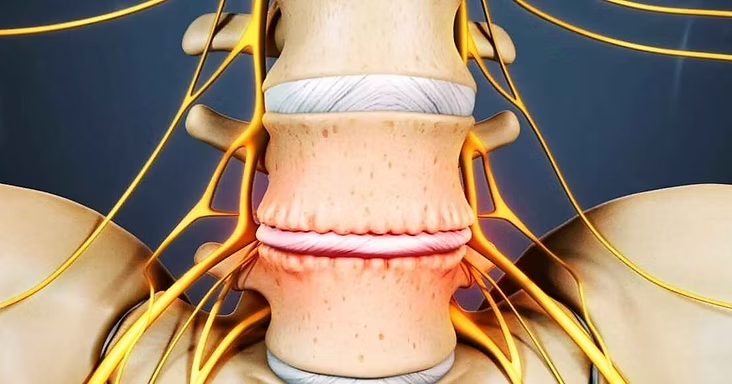
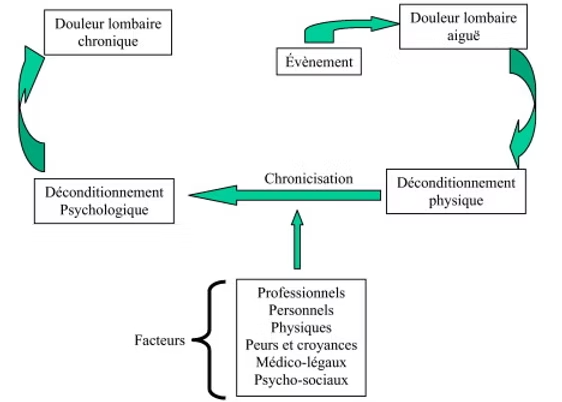
Symptoms of chronic low back pain
- Diffuse pain in the lower back, sometimes radiating to the buttocks and legs
- Morning stiffness, especially after prolonged periods of rest
- Functional limitations in everyday movements such as bending or lifting objects
- Sometimes sensations of tingling, burning or numbness in the lower limbs
Treatment and management of chronic back pain
Medication-based treatment
Analgesics and non-steroidal anti-inflammatory drugs (NSAIDs) are often prescribed to reduce pain. In some cases, antidepressants or antiepileptic drugs may be used for their effect on chronic pain.
Functional rehabilitation and physiotherapy
Physiotherapy aims to strengthen the back muscles and improve posture. Stabilisation exercises, muscle strengthening and stretching are essential to reduce pain and prevent recurrence.
Cognitive behavioural therapy (CBT)
CBT can help modify negative behaviours and perceptions related to pain, particularly in patients with depression or anxiety associated with their low back pain.
Osteopathy and manual therapy
Osteopathy is a first-line, non-pharmacological treatment for chronic low back pain. During a consultation with an osteopath in Paris 16, the aim is to identify the mobility restrictions that overload the spine — vertebral joints, intervertebral discs, fasciae and paravertebral muscles.
In addition, an osteopath specialising in chronic pain in Paris 16 will integrate a prevention and patient empowerment programme into the care plan:
- Stretching and strengthening programme (core work, lumbar stabilisation) to consolidate the results of the sessions
- Ergonomic advice: workstation setup, load handling, sleeping position
- Therapeutic education on stress management, a major factor in central sensitisation
- Personalised follow-up: frequency adjusted to progress (often 3–5 sessions to initiate change)
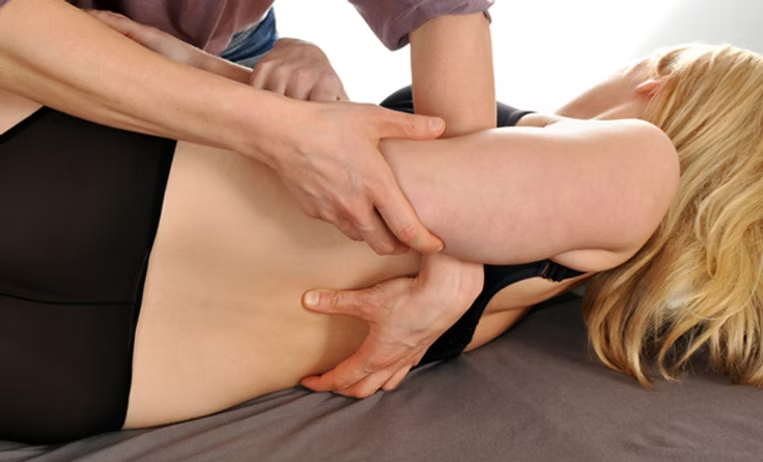

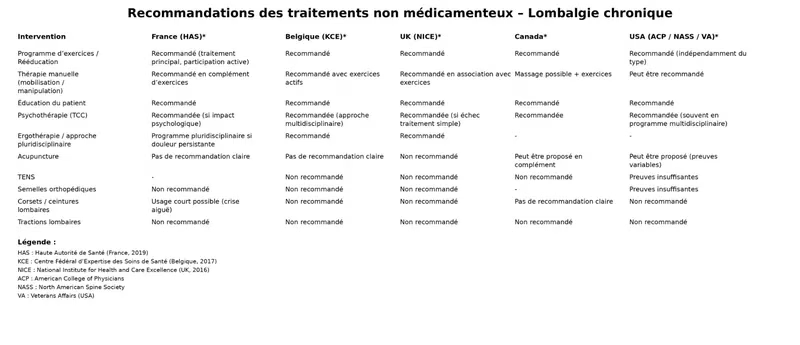
Recommendations for non-pharmacological treatment of chronic low back pain
Discover the full range of conditions managed by your osteopath in Paris 16 at the Victor Hugo osteopathy practice.
According to several learned societies:
Frequently Asked Questions (FAQ)
How many osteopathy sessions are needed for chronic low back pain?
For chronic low back pain, a protocol of 4 to 6 osteopathy sessions is generally needed, spaced 2 to 4 weeks apart. Treatment is more effective when combined with a tailored exercise programme (core strengthening, stretching) and therapeutic education.
Is osteopathy effective for disc herniation?
Yes, provided there are no major neurological signs. Osteopathy can reduce the pain associated with a disc herniation without forceful manipulation. It works on muscular tension, improves joint mobility and reduces compression of the nerve structures.
What is the difference between acute and chronic low back pain?
Acute low back pain is recent, of sudden onset, lasting less than 6 weeks. Chronic low back pain has persisted for more than 3 months and often involves central sensitisation mechanisms. Management is different: more global and multimodal for the chronic form.
When should you see a doctor rather than an osteopath?
Consult a doctor urgently if you have: sphincter disorders, motor deficit of the lower limbs, intense nocturnal pain, associated fever, or unexplained weight loss. These signs may indicate a condition requiring urgent medical management.