Sports Osteopathy — Paris 16
Plantar fasciitis
Care by Charbel Kortbawi, osteopath in Paris 16, at the Victor Hugo practice — 7 rue Georges Ville (75016).
Definition, treatment and the contribution of manual therapy and osteopathy to the management of plantar fasciitis.
Plantar fasciitis: definition, treatment and the contribution of manual therapy and osteopathy
Definition of plantar fasciitis
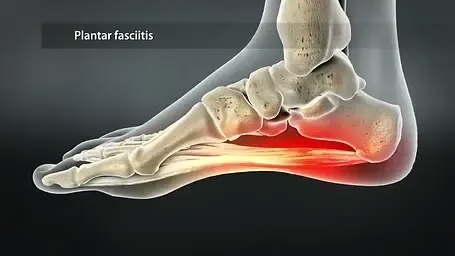
Plantar fasciitis, also known as plantar fasciopathy, is an inflammation of the plantar fascia, a thick band of connective tissue located under the foot, connecting the calcaneus (heel bone) to the toes. This structure plays a fundamental role in supporting the plantar arch and absorbing shocks during walking. Plantar fasciitis is one of the most frequent causes of heel pain and manifests as acute pain often felt during the first steps after a period of rest, notably in the morning.
The exact causes are multifactorial and include repeated microtraumas, mechanical overload, excessive muscular tensions or a biomechanical imbalance of the foot. Risk factors include being overweight, high-impact sporting activities, wearing inadequate footwear and reduced flexibility of the calf muscles.
Treatment of plantar fasciitis
Treatment is generally conservative as a first line and comprises several approaches aimed at reducing inflammation, improving the function of the plantar arch, and restoring mobility and muscular balance.
Rest and load management
It is recommended to limit intense physical activities and to avoid prolonged standing positions to reduce stress on the plantar fascia.
Specific stretching and exercises
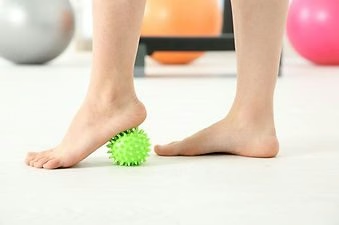
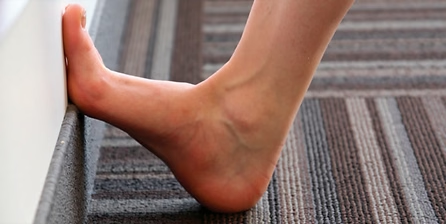
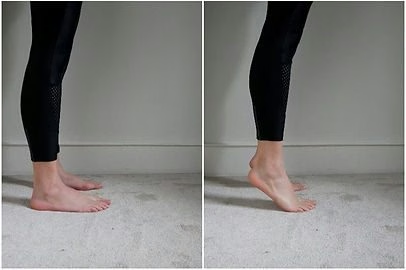
Regular stretching of the plantar fascia, calf muscles and Achilles tendon is beneficial. These exercises help improve flexibility and reduce tension on the fascia.
Orthoses and insoles
The use of orthopaedic insoles helps correct biomechanical abnormalities and reduces the pressure exerted on the heel and the plantar arch.
Injections
Corticosteroid or platelet-rich plasma (PRP) injections may be considered in certain cases to reduce inflammation and pain.
Extracorporeal shock wave therapy (ESWT)
Used in refractory cases, this technique applies shock waves to the inflamed area to stimulate healing and reduce pain.
Plantar fasciitis: contribution of manual therapy and osteopathy
Manual therapy, including osteopathy, plays an important role in the management of plantar fasciitis by acting on biomechanical imbalances and tissue restrictions. Osteopathy, which takes the whole body into account in its treatment, aims not only to reduce pain, but also to address the underlying causes of plantar fascia overload.
Reduction of muscular and tissue tensions
Through stretching, mobilisation and myofascial release techniques, the osteopath can reduce tensions in the calf, Achilles tendon and foot fascia, thereby reducing the load on the plantar fascia.
Improvement of joint mobility
Manipulation of the joints of the foot, ankle, knee and even the lumbar spine can correct movement restrictions and optimise body posture and alignment. This allows a better distribution of loads across the foot and relieves the plantar fascia.
Treatment of postural imbalances
By identifying and correcting postural imbalances that contribute to plantar overload — often associated with shin splints or lower-limb tendinopathy — osteopathy helps prevent the recurrence of heel pain.
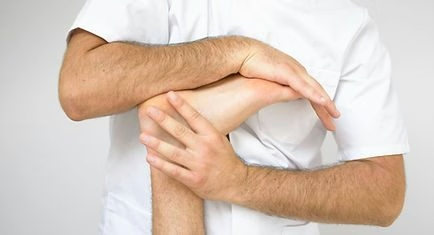
Specific exercises to relieve the plantar fascia
Frequently Asked Questions
How many osteopathy sessions are needed for plantar fasciitis?
On average, 3 to 6 sessions are required depending on chronicity. Recent cases (less than 3 months) respond favourably in 3 to 4 sessions. Chronic forms may require 6 to 8 sessions, combined with stretching and strengthening exercises.
When should I consult for plantar fasciitis?
Consult as soon as morning heel pain appears, particularly if it persists for more than 2 weeks despite rest. Early management prevents chronicity and reduces the risk of needing more invasive treatments.
Can plantar fasciitis heal without treatment?
In approximately 80% of cases, symptoms improve spontaneously within 12 months. However, active management (stretching, manual therapy, orthoses) significantly accelerates recovery and reduces the risk of recurrence.
What is the difference between plantar fasciitis and a heel spur?
Plantar fasciitis is an inflammation of the plantar fascia. A heel spur is a bony exostosis that may coexist with plantar fasciitis but is not its cause. Treatment of plantar fasciitis remains the same whether or not a heel spur is present.
Can you play sport with plantar fasciitis?
It is recommended to reduce high-impact activities (running, jumping sports) during the acute phase. Low-impact alternatives (swimming, cycling) are advised. Return to sport takes place gradually once morning pain has resolved.
Related articles