Warm-up and stretching: before or after sport?
What should you do before starting your sports session?
When preparing for physical or sporting activity, two common practices are often put forward: stretching and warming up. Although both have an important role, they are not interchangeable and act differently on the body. Here is a scientific comparison between the two practices.
1. Aim and physiological mechanism:
- Warm-up: A warm-up consists of a series of light to moderate exercises, often dynamic, intended to prepare the body for the intense physical effort to come. Its main aim is to raise body and muscle temperature, improve blood circulation, increase heart rate and mobilise the joints. Physiologically, the warm-up improves nerve conduction, facilitates oxygen release from haemoglobin and increases the elasticity of muscles and tendons.
- Stretching: Stretching aims to improve flexibility by lengthening the muscles and tendons. It may be static (holding a position for several seconds) or dynamic (controlled movement of the muscles). The main aim of stretching is to gain range of motion, improve muscular suppleness and reduce muscular tension.
2. Impact on performance:
- Warm-up: Studies show that a warm-up significantly improves sports performance. It promotes better muscular coordination, reduces the risk of injury by preparing the muscles for effort, and increases muscular power and reactivity. It also improves muscular strength and endurance.
- Stretching: Conversely, static stretches before intense activity can impair performance, notably by reducing maximal power, explosive strength and speed. This is explained by a temporary reduction in the capacity of muscle fibres to contract rapidly after prolonged stretching. However, dynamic stretches may be beneficial if included within the warm-up, since they maintain a degree of muscular activation while preparing the body for large-amplitude movements.

3. Reduction of injury risk:
- Warm-up: Many studies confirm that a warm-up reduces the risk of injury. By increasing muscle temperature, it improves muscular elasticity and reduces joint tension, thereby decreasing the risk of muscle strains or tears.
- Stretching: The common belief that stretching before exercise prevents injury is now challenged. Scientific evidence suggests that static stretches do not have a significant impact on short-term injury reduction. By contrast, post-exercise stretches are recommended to help recovery and to prevent long-term injury by maintaining muscular flexibility.
4. Recommendation for physical activity:
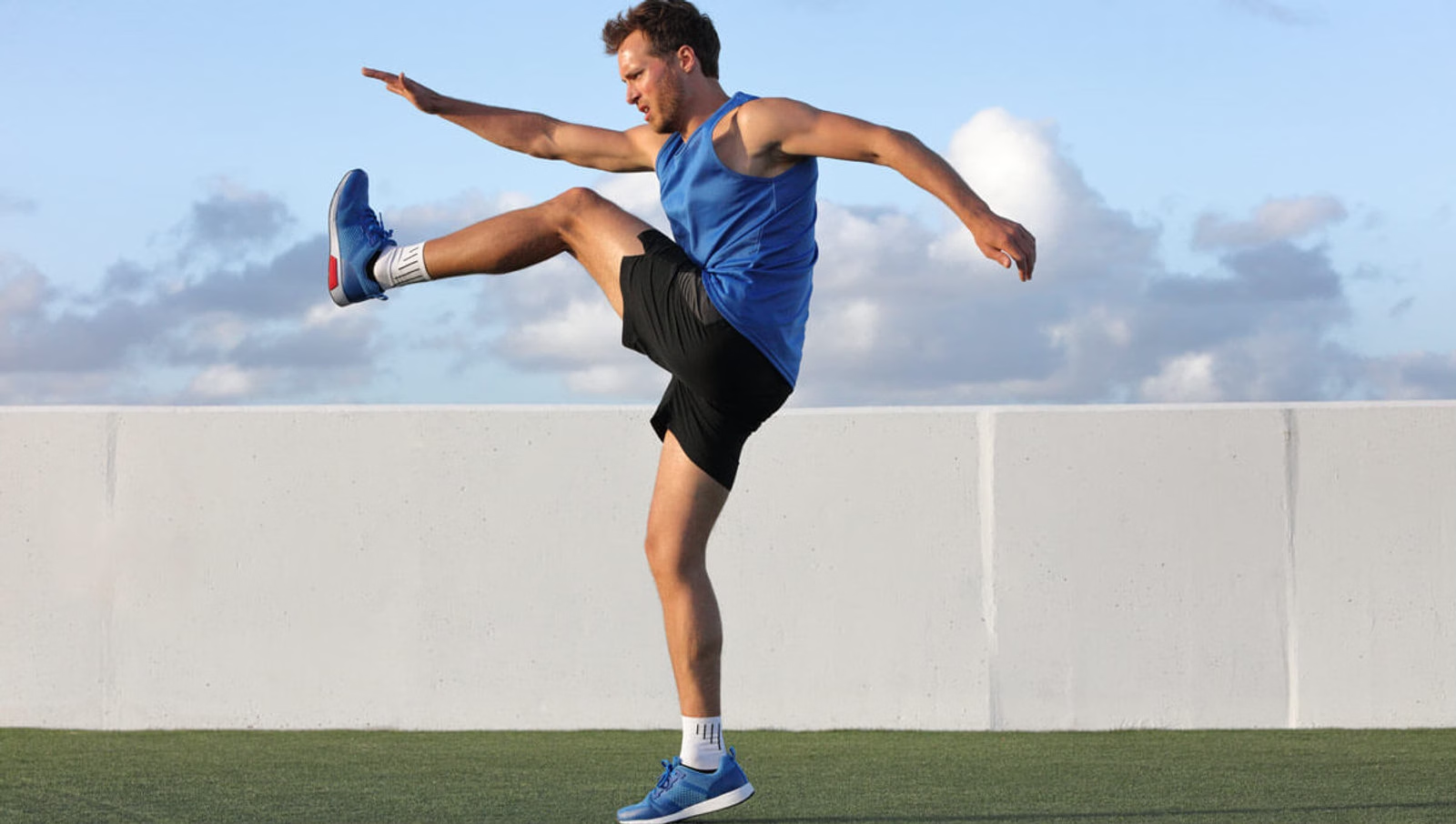
- Before exercise: It is widely recommended to prioritise a dynamic warm-up over static stretches before physical activity or sport. A good 10- to 15-minute warm-up with progressive exercises specific to the activity prepares the muscles and cardiovascular system optimally. An interesting alternative is to incorporate dynamic stretches within the warm-up. Unlike static stretches, these involve movements that lengthen the muscles while activating them (for example, arm or leg swings). This combines the benefits of a warm-up (increased body temperature) with those of flexibility.
- After exercise: Static stretches may be practised after exercise to aid recovery, reduce muscular tension and improve long-term flexibility.
Conclusion:
For effective preparation for exercise, a dynamic warm-up is preferable before physical activity, while static stretches are more appropriate after exercise. The warm-up improves performance and reduces the risk of injury, whereas static stretches before exercise can compromise these objectives.
Frequently asked questions (FAQ)
Should you stretch before or after sport?
Static stretches should be done after exercise. Before sport, prefer a dynamic warm-up (joint rotations, high knees) to prepare the muscles and joints without weakening them.
How long should a good warm-up last?
An effective warm-up lasts between 10 and 20 minutes depending on the intensity of the planned activity. It should progressively increase muscle temperature, heart rate and joint mobility.
Can osteopathy help prevent sports injuries?
Yes, osteopathy improves joint mobility, reduces muscular tension and corrects the biomechanical imbalances that predispose to injuries. Regular follow-up is recommended for athletes training at high intensity.
Why are static stretches before sport discouraged?
Prolonged static stretches before exercise temporarily reduce muscular strength and reactivity, increasing the risk of injury. They are best reserved for the recovery phase, at least 30 minutes after exercise.