Iliotibial band syndrome in runners
What is iliotibial band syndrome?
Iliotibial band syndrome (ITBS) is considered the second most common cause of knee pain in runners, after patellofemoral syndrome, and accounts for approximately one-tenth of all running-related injuries. Contemporary theories suggest that impingement of the iliotibial band against the lateral femoral epicondyle is the principal cause, leading to pain and functional impairment in affected runners. Research indicates that this syndrome arises from alterations of neuromuscular function, such as changes in muscle activation patterns, muscle weakness and reduced proprioception. This can lead to compensatory alterations of running patterns that increase stress on the iliotibial band, thereby contributing to pain in affected runners. ITBS is an overuse injury whose aetiology is multifactorial, involving intrinsic factors such as joint biomechanics and extrinsic factors such as inappropriate training, increased running mileage, uphill running and unsuitable footwear.
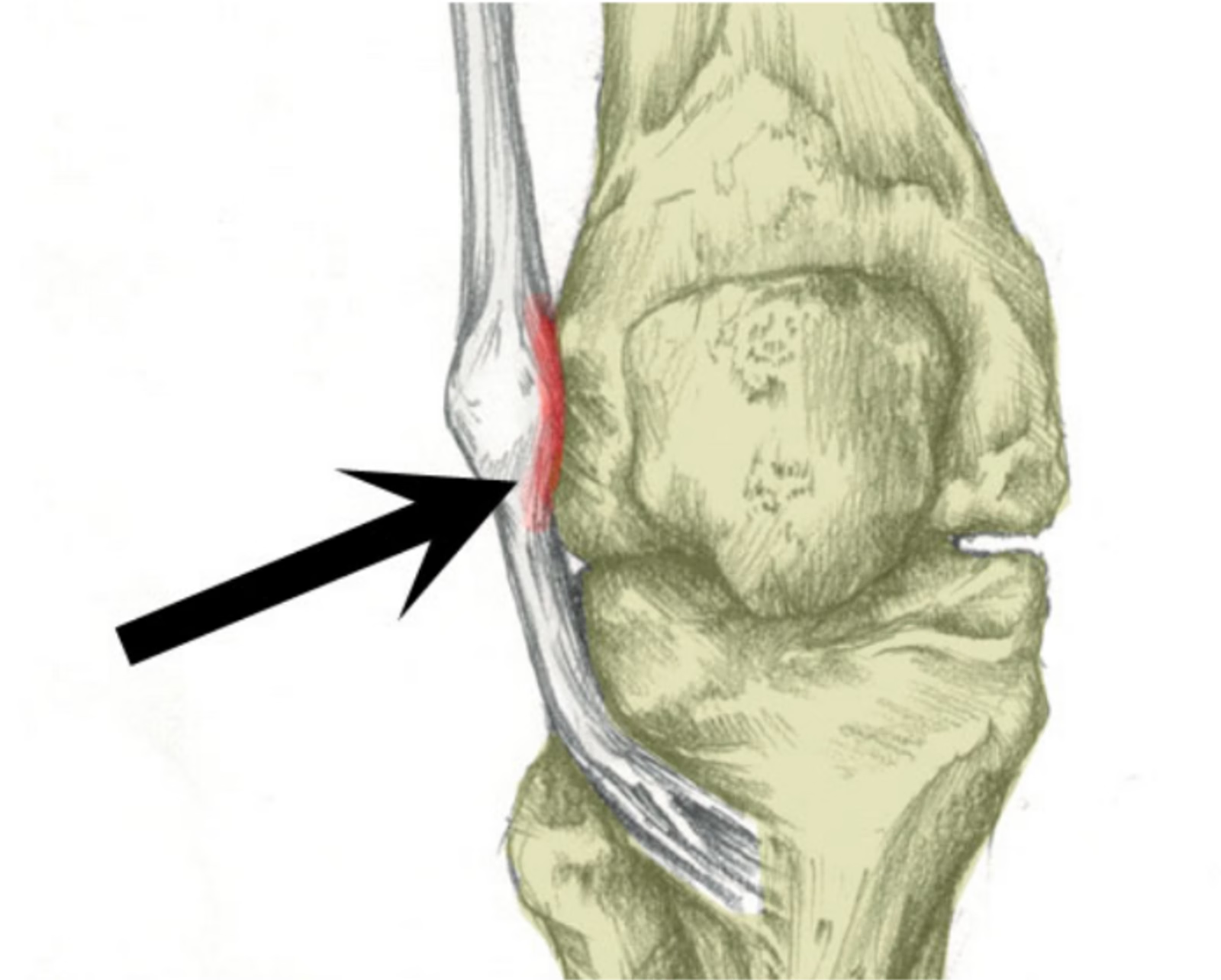
Symptoms of iliotibial band syndrome
Clinically, ITBS presents as sharp or burning pain on the lateral aspect of the knee, typically occurring between 20° and 30° of knee flexion. This pain characteristically increases during running and is associated with a reduction in function, manifesting as decreased range of motion at the hip and knee, reduced muscular strength, decreased running speed and distance, and difficulty with daily activities involving repeated knee flexion movements.
Treatment of iliotibial band syndrome
ITBS is generally managed with conservative methods, with surgical intervention indicated in refractory cases where conservative management is ineffective. Commonly used conservative treatment strategies include anti-inflammatories, exercise and interventions such as manual therapy and electrotherapy. Conservative treatments of ITBS are preferred to surgical methods, but the lack of standardisation and the limited evidence from randomised controlled trials highlight the discrepancies between the various reported options.
New treatment recommendations: the contribution of manual therapy and osteopathy
A new systematic review recently published in Frontiers in Sports and Active Living (Sanchez-Alvardo, 2024) compared the effect of several treatment modalities on pain and function in runners. The study concludes that the most effective treatment is hip abductor strengthening exercises combined with manual therapy or shock-wave therapy.
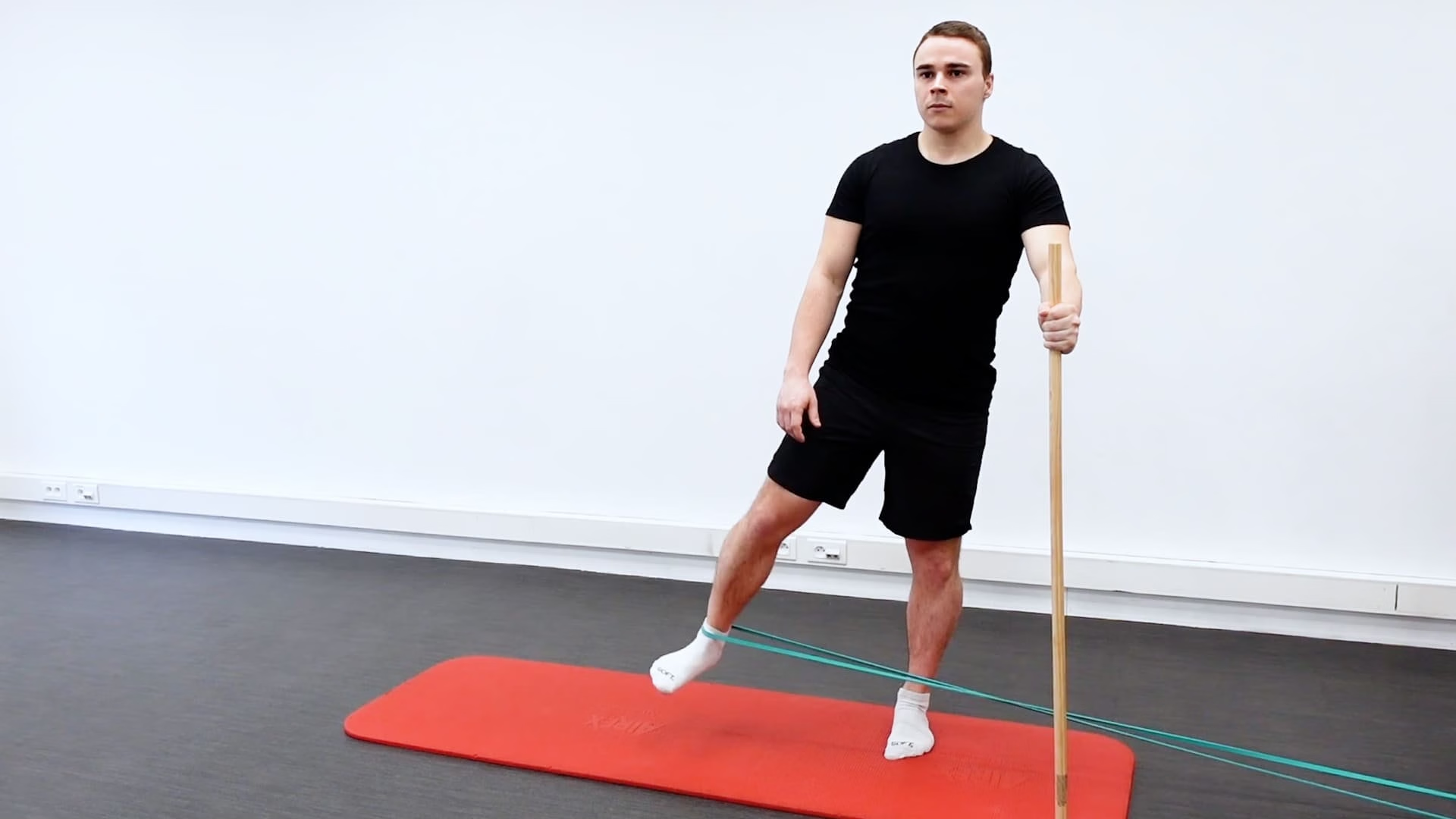
The aim of manual therapy or osteopathy is to restore the lack of mobility in the biomechanics of the pelvis, hip, knee and ankle. Myofascial release techniques were the most effective according to the study.
Conclusion
In conclusion, hip abductor strengthening exercises, particularly when combined with shock-wave therapy or manual therapy, are effective in reducing pain and improving function in runners with ITBS. Other methods appear promising, but the current literature on gait retraining and other strategies lacks studies of high methodological quality. Addressing these gaps would allow management to be refined, treatment outcomes improved and return to sport facilitated for runners.
Frequently asked questions (FAQ)
What is iliotibial band syndrome?
Iliotibial band syndrome (ITBS), or 'runner's knee', is an inflammation of the fibrous band running along the outer surface of the thigh. It causes sharp pain on the outer side of the knee, typically appearing after 20-30 minutes of running.
Is osteopathy effective for iliotibial band syndrome?
Yes, osteopathy addresses the biomechanical imbalances (tension in the TFL, gluteal weakness, foot issues) that overload the iliotibial band. It is often combined with strengthening exercises for the gluteus medius for comprehensive management.
How long does recovery from iliotibial band syndrome take?
With appropriate management (osteopathy, exercises, training adaptation), most runners recover within 6 to 12 weeks. Return to running must be progressive to avoid recurrence.
How can iliotibial band syndrome be prevented?
Prevention involves strengthening the gluteal muscles (hip abductors), an appropriate warm-up, progressive increase in mileage and wearing shoes suited to your gait. An annual osteopathic assessment is recommended for regular runners.