Rotator cuff and shoulder strengthening
Rotator cuff and shoulder strengthening programme
Why strengthen the rotator cuff?
The rotator cuff is a group of muscles and tendons located around the shoulder joint, playing an essential role in stabilising and moving it. It is composed of 5 main muscles: the supraspinatus, the infraspinatus, the teres minor, the teres major and the subscapularis. Their role is crucial in keeping the head of the humerus centred within the glenoid cavity of the scapula during shoulder movements. Rotator cuff injuries are common, particularly in athletes and in people performing repetitive activities, as well as in individuals from age 50 onwards. Rotator cuff strengthening exercises are therefore essential to prevent injury and to rehabilitate this area in case of lesion.
A weakened or imbalanced rotator cuff may lead to shoulder pain, tendinopathies, tears, or even joint instability. According to several studies, adequate strengthening of these muscles allows you to:
- Improve stability of the shoulder joint.
- Reduce chronic shoulder pain and improve function.
- Prevent injuries, particularly tendinopathies and tears.
- Optimise performance in athletes, especially those involved in sports such as swimming, tennis and baseball.
Rotator cuff strengthening and rehabilitation exercises
Here are a few effective exercises, based on recommendations from the scientific literature, to strengthen and mobilise the rotator cuff. It is advisable to perform them with resistance bands or light weights to avoid overload. The exercises are drawn from the recommendations of the American Academy of Orthopaedic Surgeons.
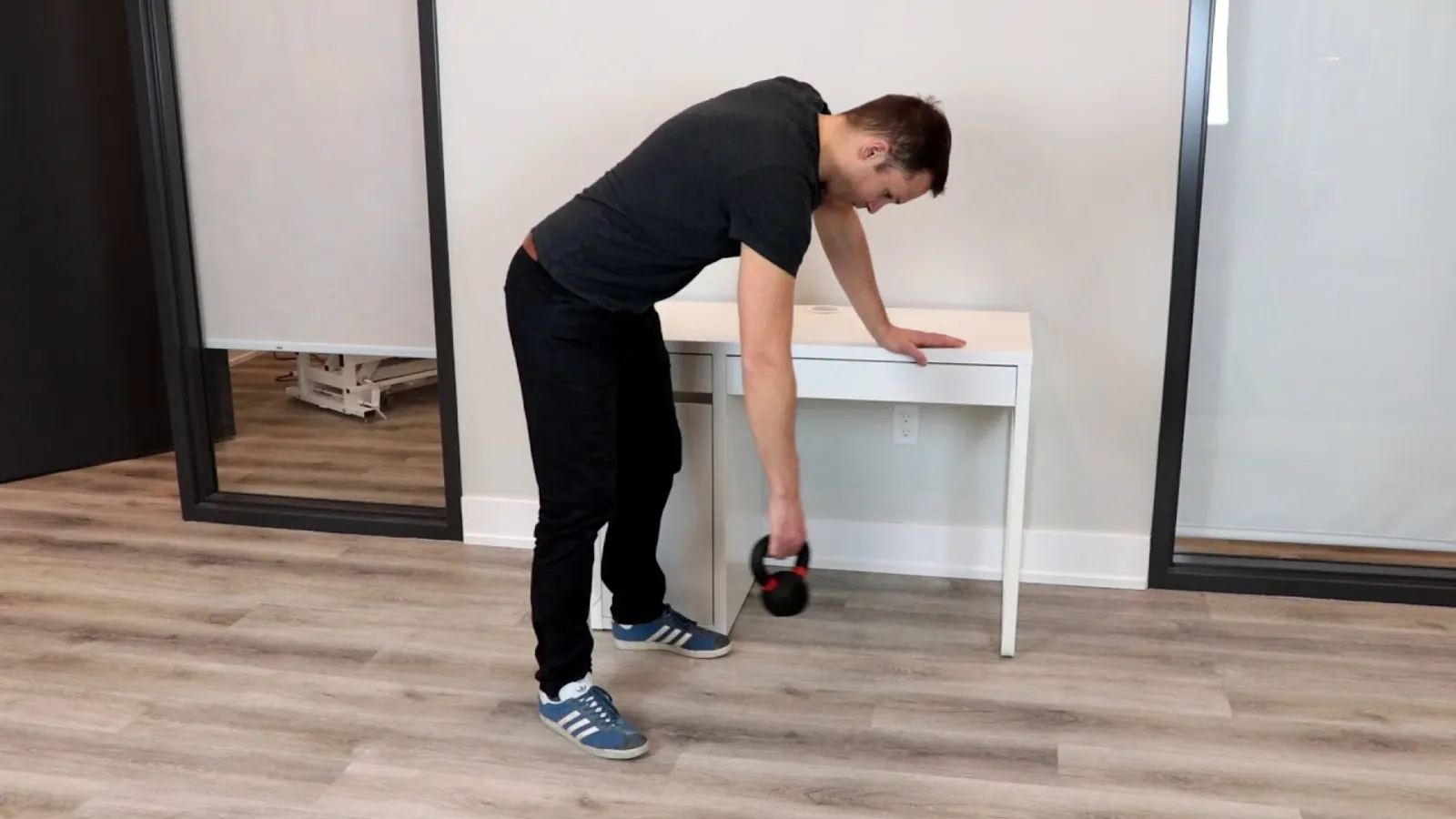
Pendulum exercise
Main muscles involved: deltoids, supraspinatus, infraspinatus, subscapularis
Equipment needed: a 1 or 2 kg dumbbell.
Repetitions: 3 sets (morning, noon and evening) of 45 seconds to 1 minute.
Position: Lean forward and place one hand on a counter or table for support. Let the other arm hang freely along your body.
Execution: Gently swing your arm forward and backward. Repeat the exercise by moving your arm side to side, then repeat performing a circular motion.
Tip: do not round your back and do not lock your knees.
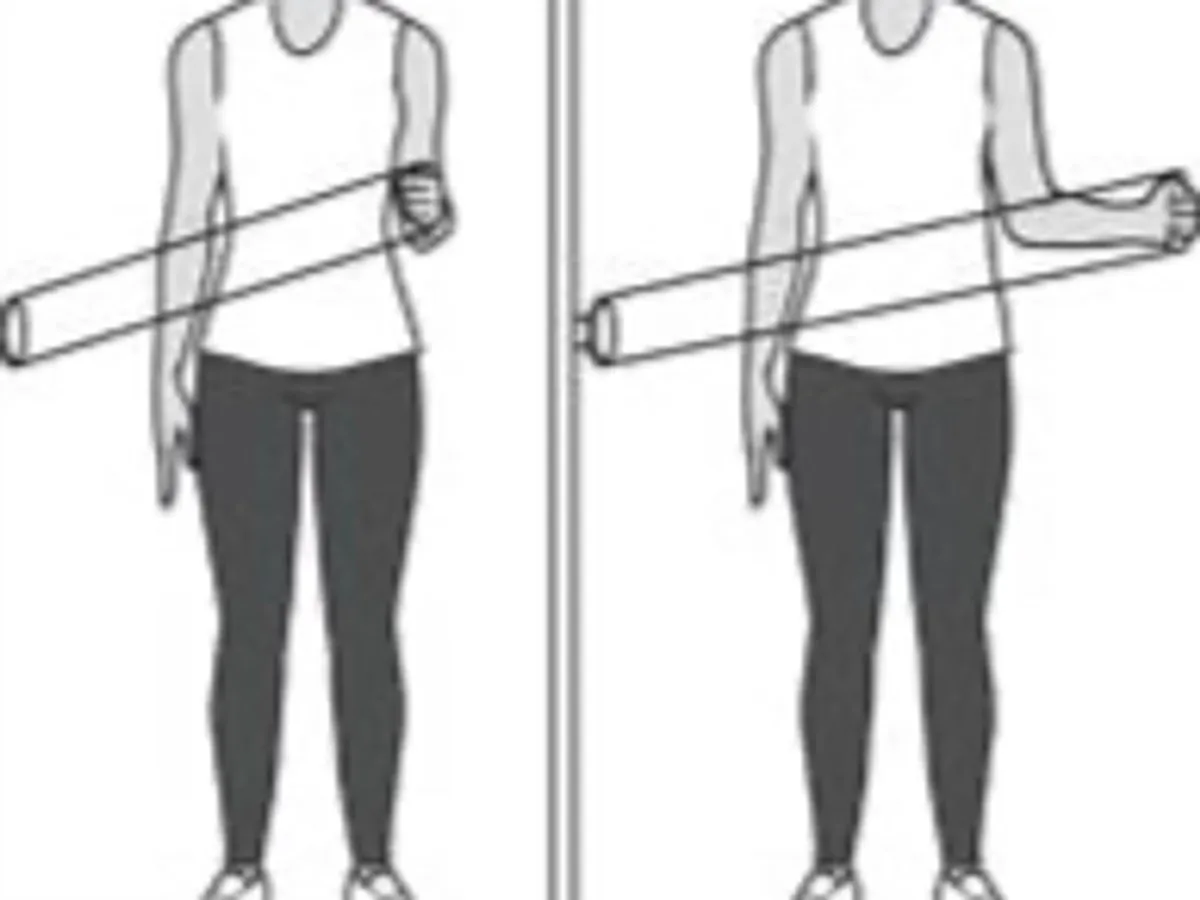
External rotation with resistance band
Main muscles involved: this exercise primarily targets the infraspinatus, teres minor and posterior deltoid — the muscles responsible for external rotation of the shoulder.
Equipment needed: use a resistance band of comfortable resistance.
Repetitions: 3 sets of 8.
Position: attach a resistance band at a height corresponding to your size. Hold the band with the hand opposite the anchor point, elbow flexed at 90° and tucked against the body.
Execution: keeping the elbow close to the body, slowly rotate the forearm outward while keeping the elbow against the body, then slowly return to the initial position. Do 3 sets of 10 to 15 repetitions.
Tip: lightly squeeze your shoulder blades as you draw your elbow back.
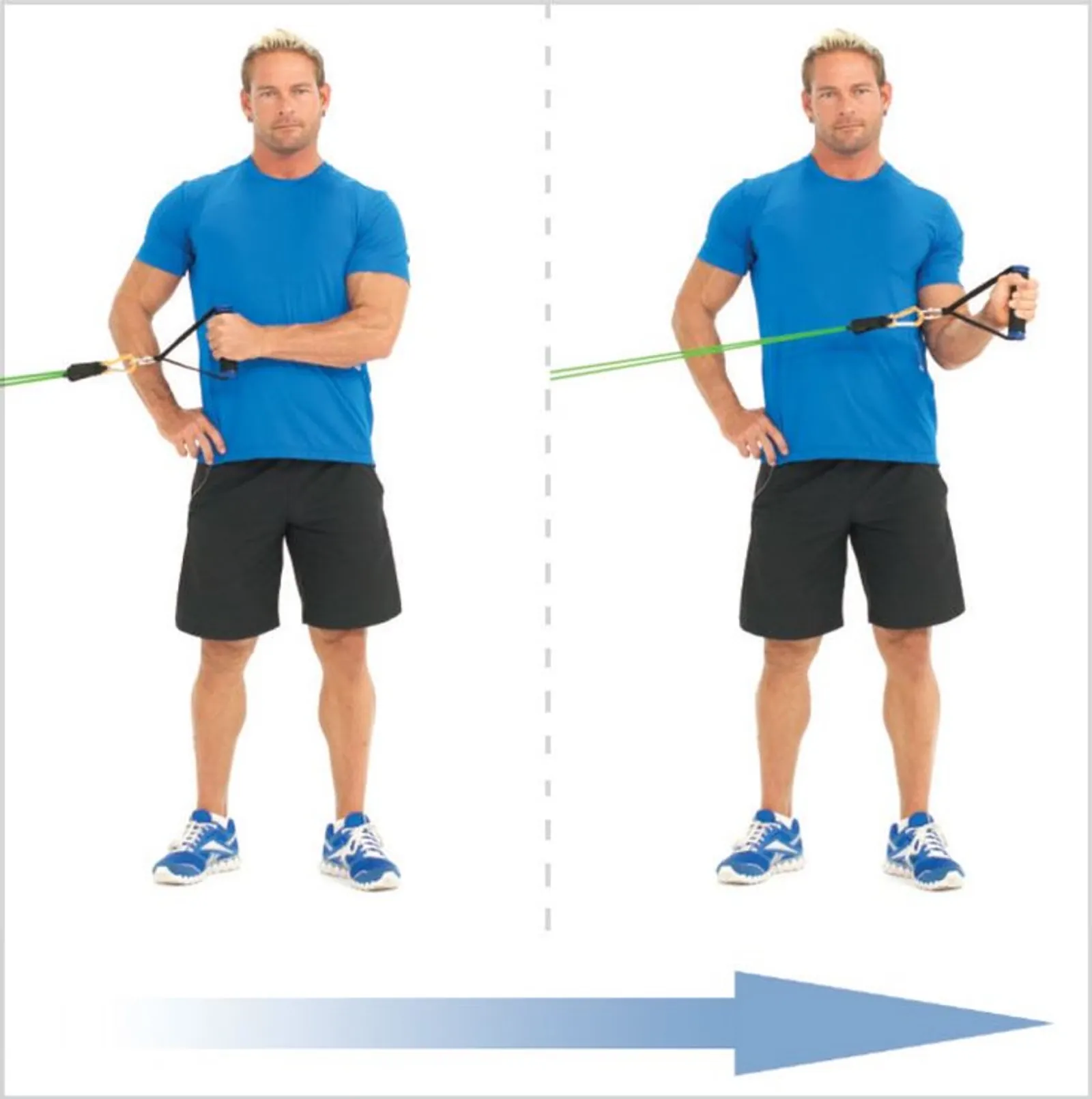
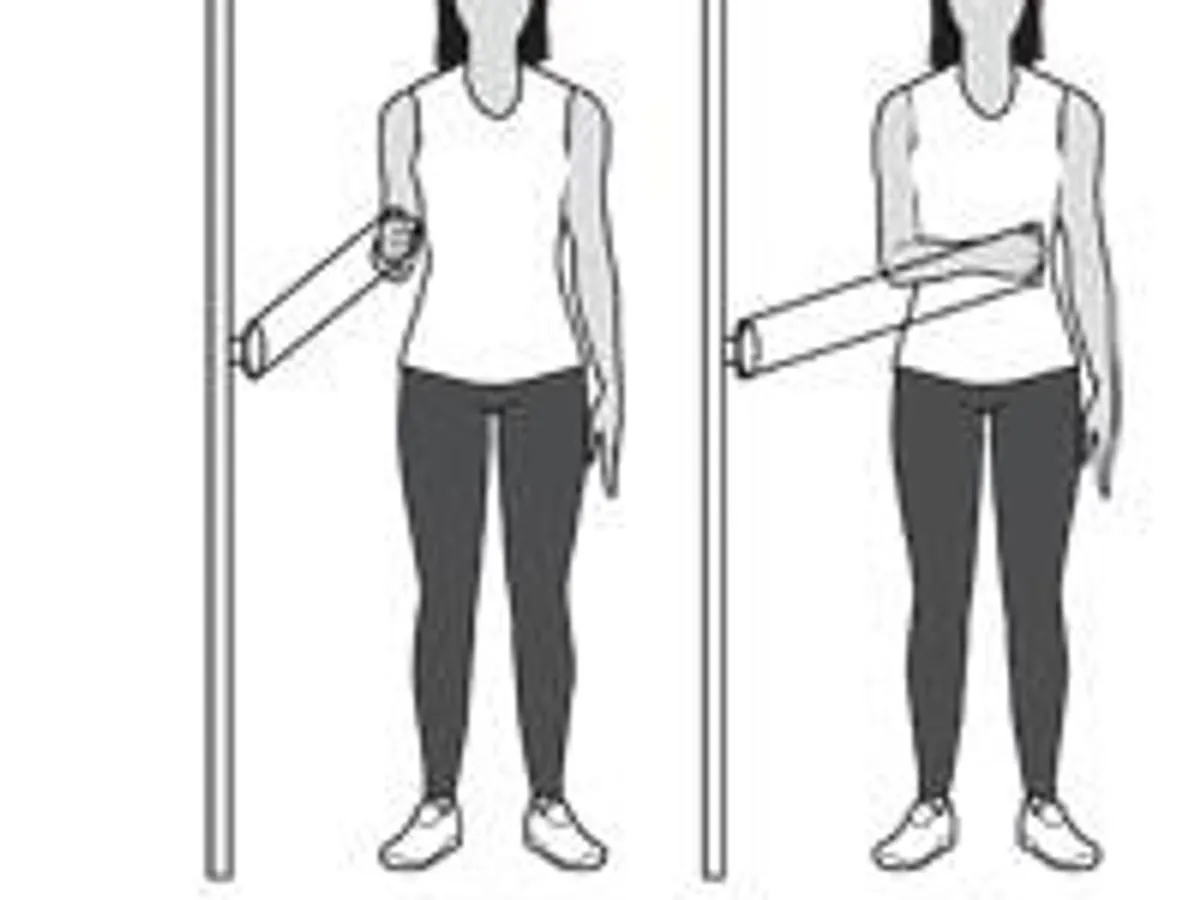
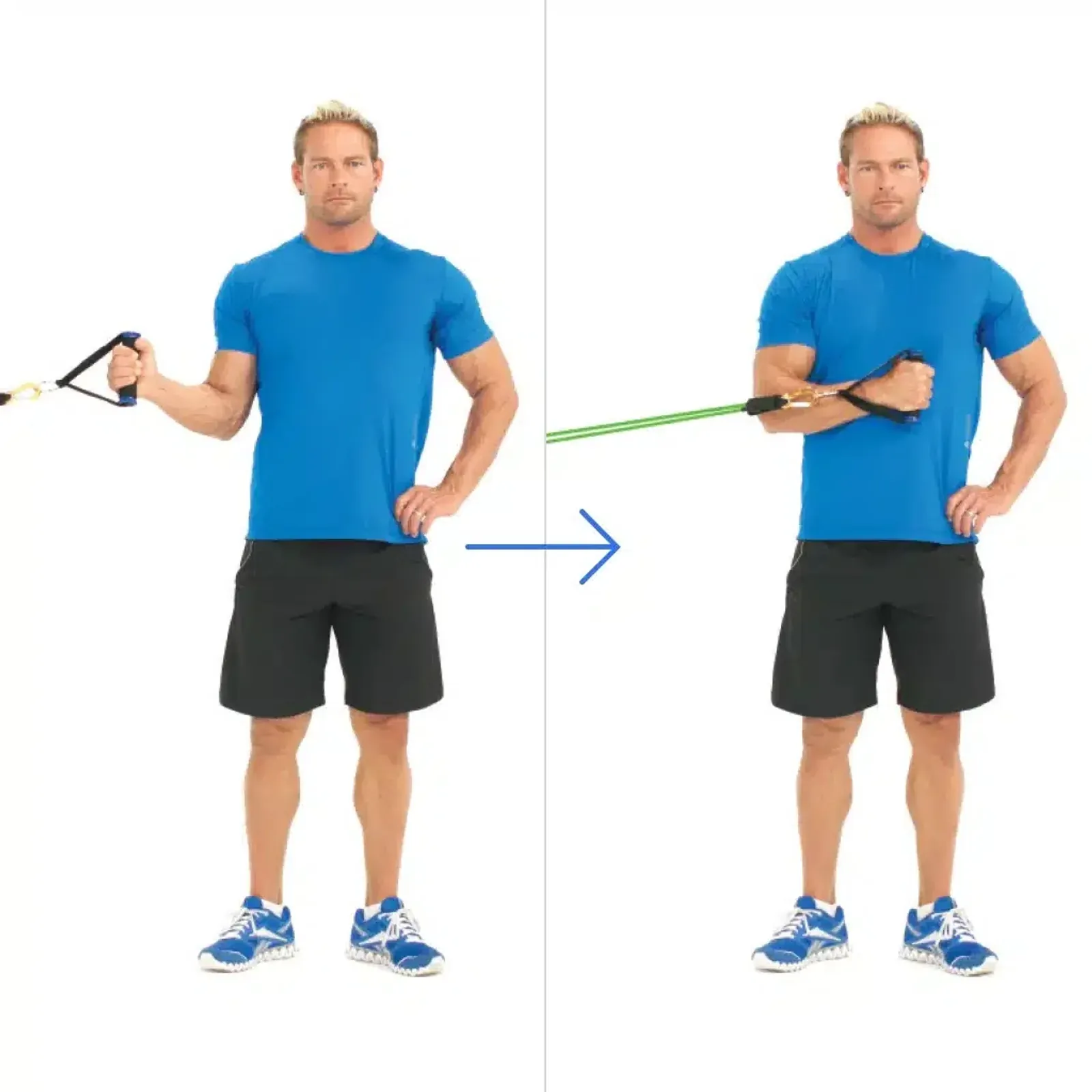
Internal rotation with resistance band
Main muscles involved: pectorals, subscapularis
This exercise should be felt in the chest and shoulder.
Equipment needed: use a resistance band of comfortable resistance.
Repetitions: 3 sets of 8
Position: Attach a resistance band at a height corresponding to your size. Stand holding the band, elbow bent and tucked along the body, as shown in the starting position.
Execution: Keep your elbow close to your side and bring your arm across the body. Slowly return to the starting position and repeat the exercise.
Tip: keep your elbow pressed against your side.
Scapular retraction
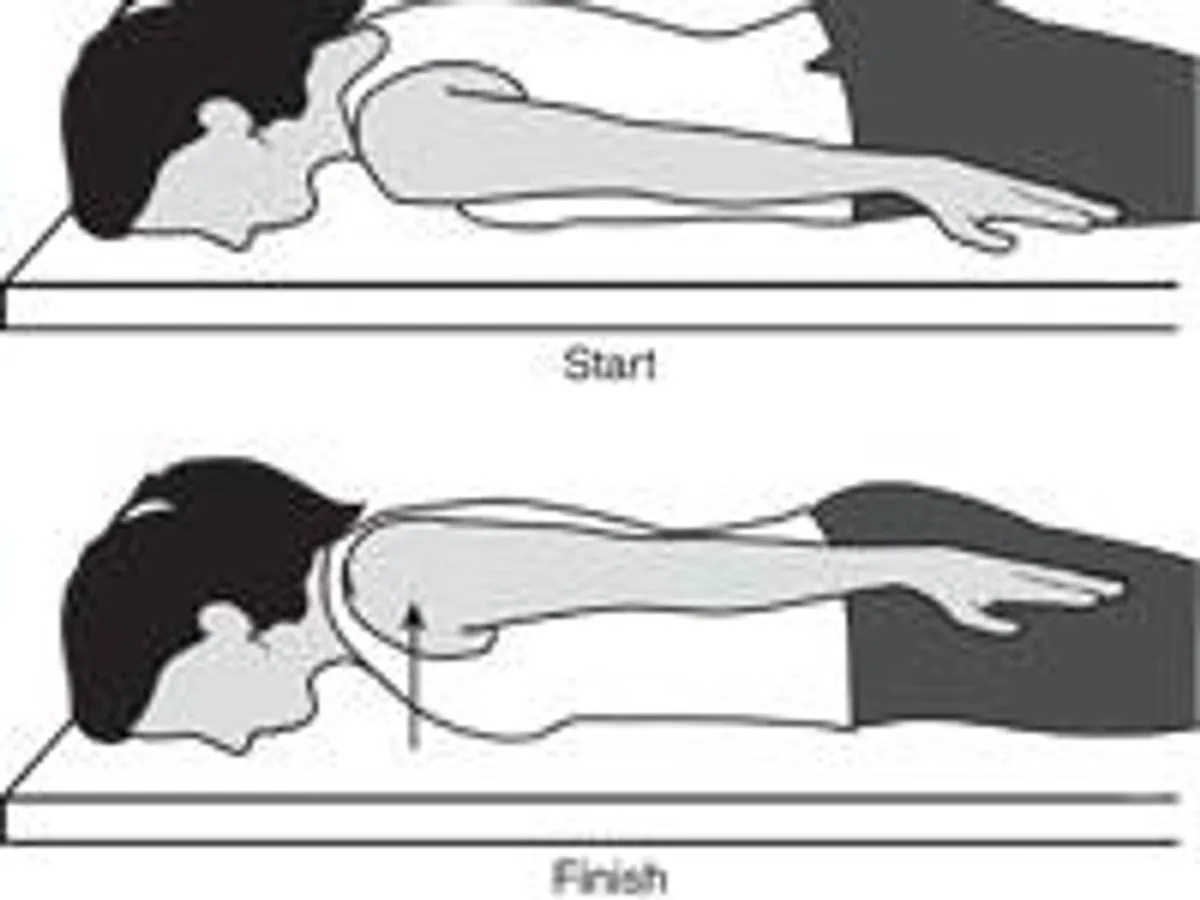
Main muscles involved: middle trapezius, serratus
You should feel this exercise in the upper back, around the shoulder blade.
Equipment needed: none.
Repetitions: 2 sets of 10.
Position: Lie prone, arms along the body. Place a pillow under your forehead for comfort, if needed.
Execution: Gently draw your shoulder blades together while lightly drawing the shoulders down towards the feet. Hold the position for 10 seconds. Relax and repeat the exercise 10 times.
Tip: do not tense the neck.
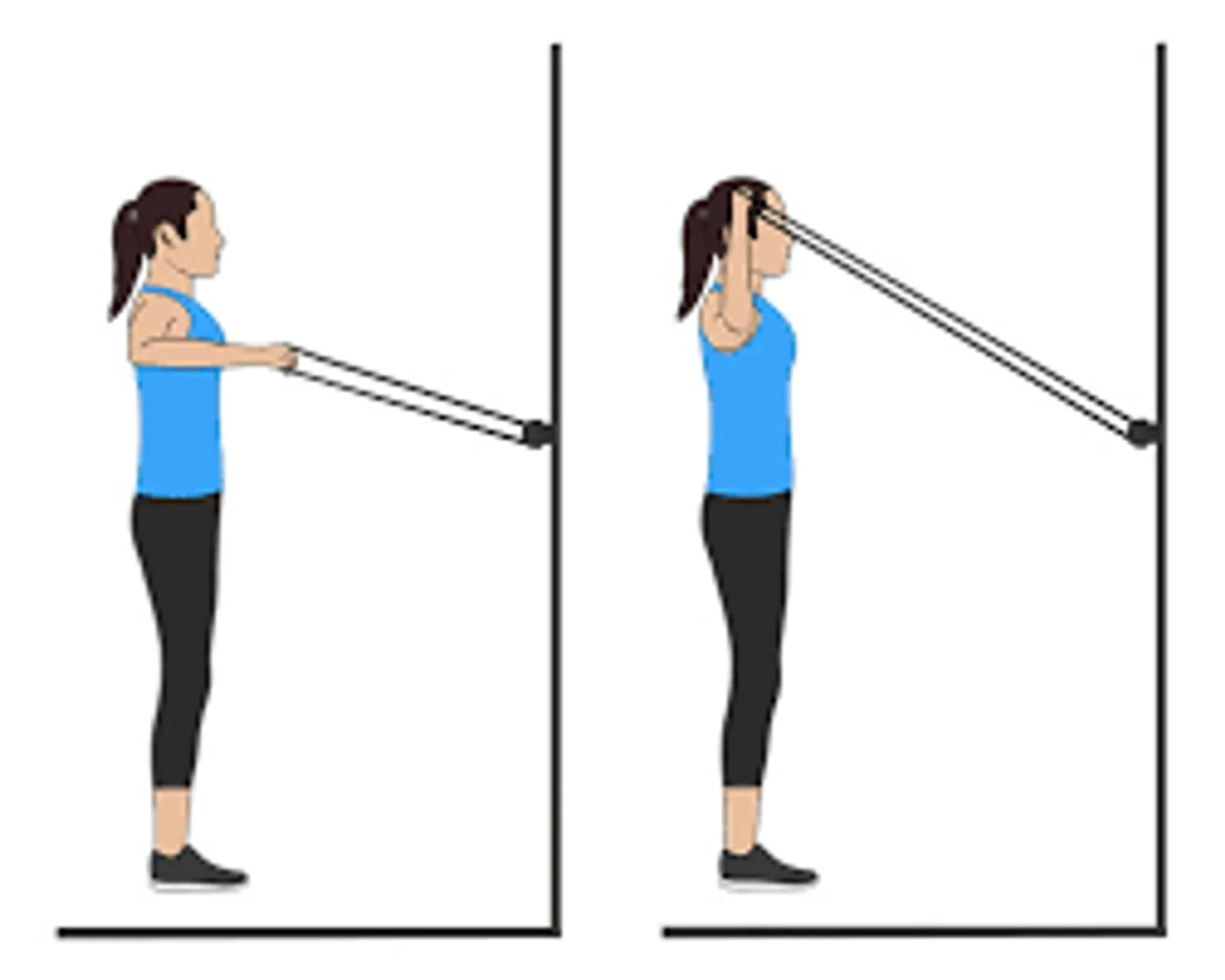
External rotation, shoulder at 90°
Main muscles worked: infraspinatus and teres minor.
You should feel this exercise at the back of the shoulder and in the upper back.
Equipment needed: use a resistance band of comfortable resistance.
Repetitions: 3 sets of 8
Position: Stand holding the band, shoulder at 90°, elbow bent at 90° and raised to shoulder height, as shown in the starting position.
Execution: Keeping the shoulder and elbow on the same level, slowly raise the hand until it is aligned with your head. Slowly return to the starting position and repeat the exercise.
Tip: ensure that your elbow remains aligned with your shoulder.
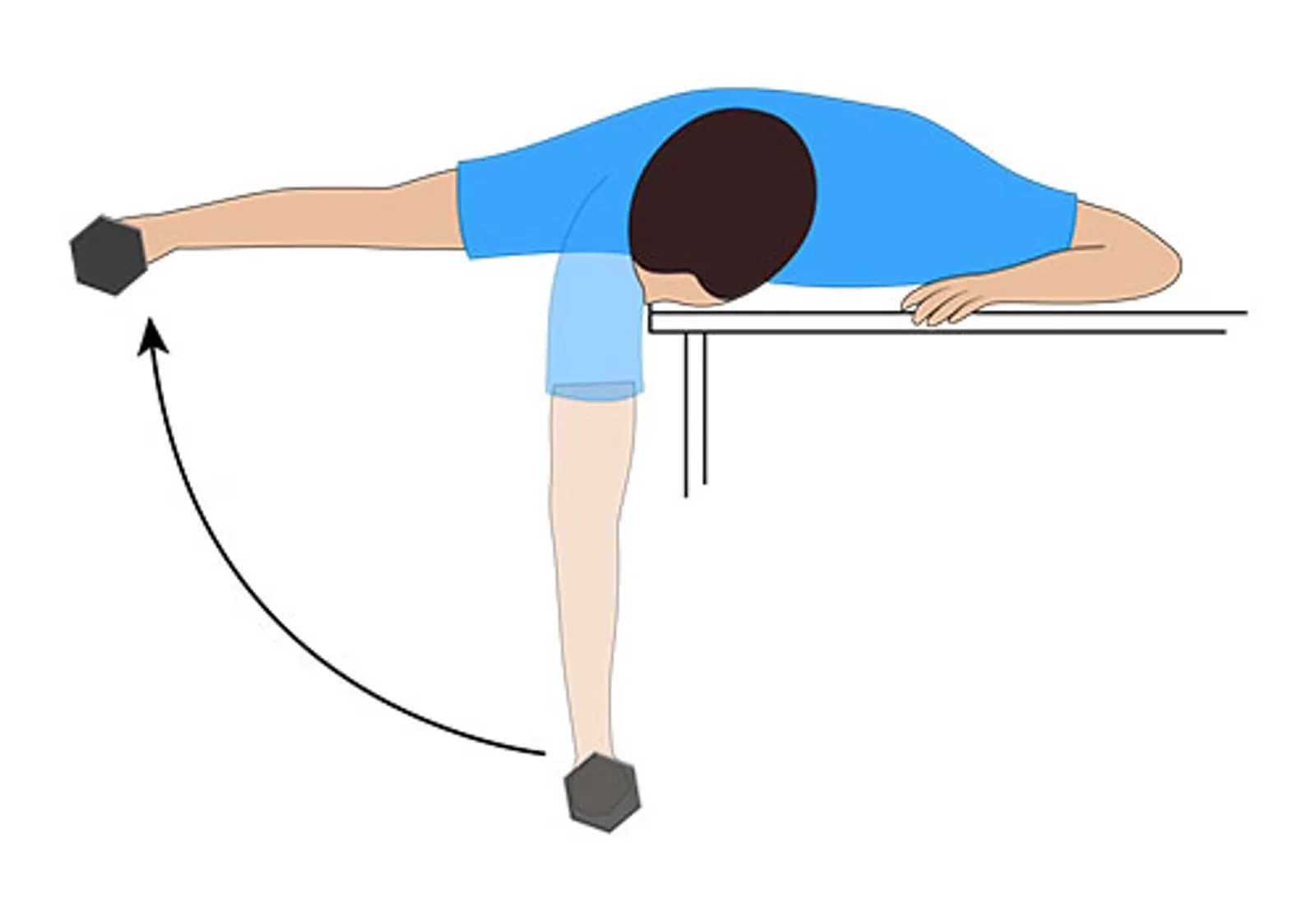
Horizontal shoulder abduction
Main muscles worked: middle and lower trapezius, infraspinatus, posterior deltoid.
This exercise should be felt at the back of the shoulder and in the upper back.
Equipment needed: start with a weight allowing 3 sets of 8 repetitions and progress to 3 sets of 12 repetitions. As the exercise becomes easier, add weight progressively.
Repetitions: 3 sets of 8
Position: Lie prone on a table or bed, arm hanging over the side.
Execution: Keep your arm straight and slowly raise it until it reaches the height of the table. Slowly lower it to the starting position and repeat the exercise.
Tip: control the movement as you lower the weight.
Rotator cuff strengthening exercises are indispensable for preserving shoulder health, whether for prevention or rehabilitation. The scientific literature highlights the importance of working these muscles to improve shoulder function, prevent injury and optimise sports performance. It is, however, essential to perform these exercises with correct technique and to progress appropriately to avoid overloading the joint.
Charbel J. Kortbawi DO, MSc.
Frequently asked questions (FAQ)
Why strengthen the rotator cuff?
The rotator cuff stabilises the shoulder during arm movements. Weakening of these muscles (overuse, sedentary lifestyle, trauma) leads to pain, instability and tendinopathies. Strengthening effectively prevents and treats these conditions.
Can osteopathy help with shoulder pain?
Yes, osteopathy restores joint mobility of the shoulder (glenohumeral, acromioclavicular, scapulothoracic) and reduces tension in the cuff tendons. It is often combined with a progressive muscle-strengthening programme.
How long does rotator cuff rehabilitation take?
Rehabilitation of a simple cuff tendinopathy generally takes 6 to 12 weeks with daily exercises. A partial tear may require 3 to 6 months of rehabilitation, sometimes alongside medical treatment.
Are eccentric exercises effective for shoulder tendinopathies?
Yes, eccentric exercises (muscle contraction during lengthening) are among the most effective for treating shoulder tendinopathies. They promote tendon collagen regeneration and reduce pain over the long term.