Pregnancy & Post-partum
Osteopathy during pregnancy in Paris 16
Muscle and joint pain during pregnancy and after childbirth
Charbel Jean Kortbawi, osteopath in Paris 16
Former osteopath at the maternity unit of the American Hospital of Paris
Causes and contributing factors of joint and muscular pain in pregnant women
Mechanical and postural changes in pregnant women
Pregnancy is a period of profound physiological changes that significantly impact the body's mechanics and posture. Understanding these modifications allows for better management to prevent and effectively treat the associated pain and discomfort.
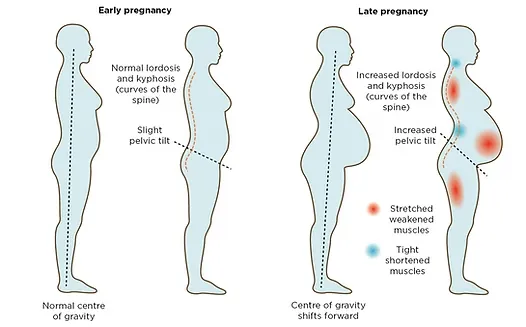
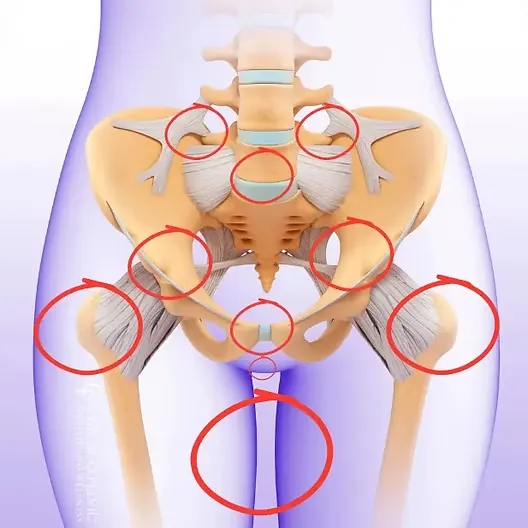
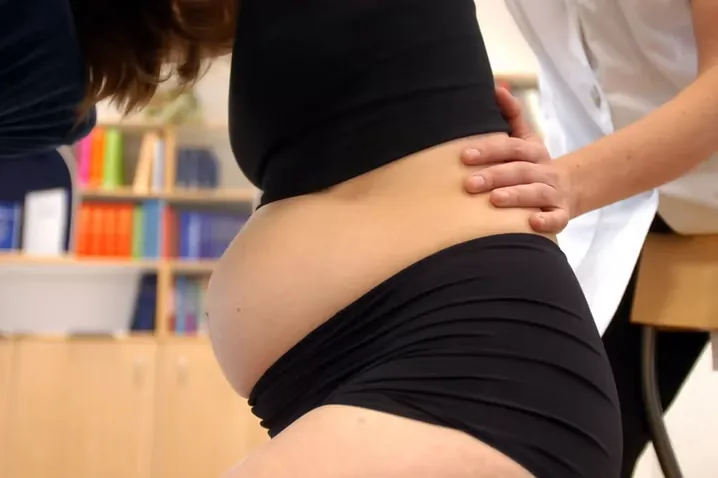
During pregnancy, the progressive increase in the weight and volume of the uterus causes an anterior shift in the centre of gravity. This postural change manifests as an accentuation of the lumbar lordosis (low-back curvature), anterior pelvic tilt and stretching of the abdominal muscles. These changes may induce increased stress at the lumbar and pelvic levels, frequently causing lumbar pain, pubic symphysis pain or sacroiliac pain. The lower limbs are also subjected to increased stress, due to the increase in body weight and the postural adaptations required to maintain balance. This can favour the onset of pain at the hips, knees and feet.
Hormonal changes impacting the musculoskeletal system
During pregnancy, major hormonal changes occur and significantly impact the musculoskeletal system. Among these hormones, relaxin plays a predominant role, accompanied indirectly by progesterone and oestrogens.
Relaxin, produced initially by the ovarian corpus luteum and then principally by the placenta, peaks during the first trimester. It causes marked ligament laxity, particularly at the pelvis, thereby facilitating foetal passage during delivery. This increased laxity may also extend to other joints, increasing their mobility and potentially exposing the patient to a risk of joint instability as well as musculoskeletal pain such as lumbago or pelvic pain.
Progesterone, although principally involved in the relaxation of the uterine smooth muscles, may indirectly amplify general muscular relaxation and slightly influence ligament laxity.
Oestrogens, for their part, induce fluid retention and an increase in the vascularisation of soft tissues, which can lead to increased joint sensitivity and exacerbate muscular or ligamentous discomfort.
Indications of osteopathy in pregnant women
Lumbar and pelvic pain
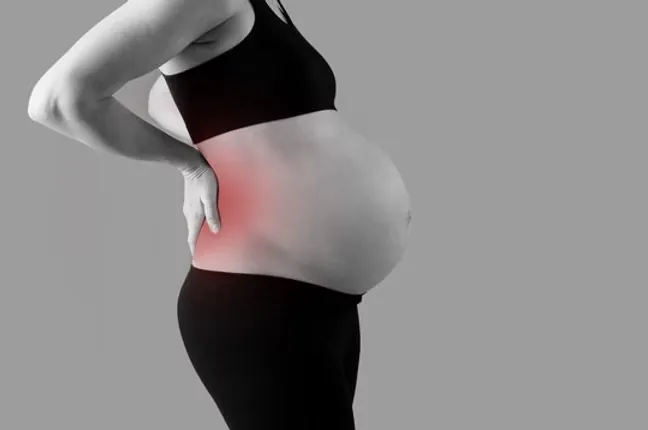
Lumbar and pelvic pain is one of the most frequent complaints during pregnancy, affecting up to 50% of pregnant women. A systematic review conducted by Franke et al. (2017) in the Journal of Bodywork and Movement Therapies indicates that osteopathy significantly reduces this pain and improves the functional mobility of the pelvis. These results are corroborated by another randomised controlled trial conducted by Licciardone et al. (2010) published in the American Journal of Obstetrics & Gynecology, which reports substantial improvement in symptoms in women who received osteopathic treatment compared to a control group. The PROMOTE study by Hensel et al. (2015), published in the American Journal of Obstetrics & Gynecology, demonstrated a significant improvement in lumbar pain as well as functional improvement in pregnant women receiving osteopathic treatment.
Preparation for childbirth
Osteopathy offers a complementary, non-invasive approach to support pregnant women in their preparation for childbirth.
The osteopathic treatment aims to release mechanical constraints by working gently on the joints, muscles and ligaments. These gentle and non-invasive techniques facilitate the mobility of the pelvis, optimise posture, improve blood and lymphatic circulation, and reduce musculoskeletal tensions. Thus, osteopathy also contributes to preparing the body for a more harmonious delivery.
Several scientific studies highlight the value of osteopathic consultations during the prenatal period for improving the general well-being and quality of life of the expectant mother, and for favouring better adaptation of the body to the changes of pregnancy (Sheraton et al., 2018; Correia et al., 2023; Correia, M. L. A. et al., 2024).
Rib pain during pregnancy
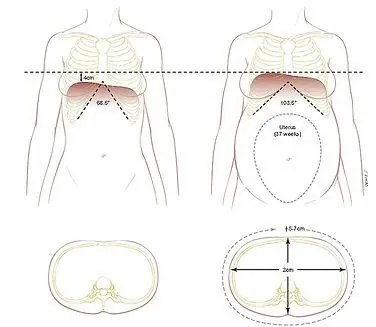
Rib pain during pregnancy is frequent and mainly related to the expansion of the uterus pushing against the rib cage, to the baby's position and to the action of relaxin which loosens the ligaments. The diaphragm may also be compressed, leading to respiratory discomfort or additional tension. To relieve this pain, osteopathy can be beneficial by reducing muscular and diaphragmatic tension, thereby improving thoracic mobility and respiratory comfort. This pain usually disappears after childbirth.
Sciatica
Sciatica is a pain that radiates along the sciatic nerve, starting from the lower back or the buttock and descending towards the thigh, calf, or even the foot. It affects many pregnant women, particularly from the second and third trimester.
During pregnancy, several factors favour compression or irritation of the sciatic nerve. The increased volume of the uterus exerts direct pressure on the pelvic structures, while the postural changes — accentuation of the lumbar lordosis and pelvic tilt — create increased stress on the lumbar vertebrae and the sacrum. The ligament laxity induced by relaxin can also destabilise the sacroiliac joints, worsening the irritation of the nerve.
Frequently Asked Questions (FAQ)
When during pregnancy should I see an osteopath?
Osteopathic care is generally initiated from the end of the first trimester, around the 12th to 14th week of amenorrhoea. This precaution is justified by the high natural risk of spontaneous miscarriage during the first trimester: according to the American College of Obstetricians and Gynecologists (ACOG, 2018), approximately 10% of clinically recognised pregnancies end in spontaneous miscarriage, with 80% occurring during the first trimester. Although osteopathy has no formally documented contraindication at this stage, clinical practice recommends, as a precaution and out of professional duty, waiting until the end of the first trimester before treating lumbar and sacroiliac pain, in order to avoid any confusion with an independent obstetric event.
Is osteopathy safe during pregnancy?
Yes. Osteopathy is a non-invasive manual medicine whose safety during pregnancy has been evaluated in several reference clinical trials. The PROMOTE study (Hensel et al., J Am Osteopath Assoc, 2016), on 400 pregnant women in the third trimester, identified no increase in the risk of obstetric complications in the treated group. The techniques used are specifically adapted to each trimester — without direct manipulation of the uterus or pelvic examination. Absolute contraindications include high-risk pregnancies, severe gestational hypertension, placenta praevia, active metrorrhagia and threatened preterm labour. Outside these situations, osteopathic treatment constitutes a safe and effective modality for improving pain and spinal function throughout pregnancy (Licciardone et al., 2010; Hensel et al., 2015).
When should I consult an osteopath after childbirth?
There is currently no official recommendation setting a precise timeframe. On the basis of common clinical practice, a consultation is generally considered from the 6th to 8th week after childbirth, in line with standard obstetric follow-up. It may be brought forward in cases of persistent coccyx pain (coccydynia), lumbosacral pain, postural difficulties linked to breastfeeding, or after a caesarean section. Several scientific references support the value of manual therapy in the postpartum period. The narrative review by Zhang et al. (Medicine (Baltimore), 2024) confirms that manual myofascial therapy effectively reduces postpartum pain. The randomised controlled trial by Schwerla et al. (J Am Osteopath Assoc, 2015), conducted on 80 women, demonstrated a significant reduction in pain and functional disability after four osteopathy sessions.
How do I book an appointment?
You can book directly online via Doctolib or by phone on 06 01 77 09 97. The practice is located at 7 rue Georges Ville, Paris 16, Monday to Friday from 9am to 7:30pm and Saturday from 9am to 1pm.