Chronic Pain
How to relieve chronic pain with an osteopath in Paris 16
What is chronic pain?
According to the IASP (International Association for the Study of Pain), “pain is an unpleasant sensory and emotional experience associated with, or resembling that associated with, actual or potential tissue damage.”
- The term sensory means that pain can be described in terms of its physiological characteristics.
- The term emotional underlines that pain is unpleasant and subjective.
Pain functions as an alarm signal. If acute pain persists beyond three months, it evolves into chronic pain. At that point, the sensation loses its meaning as an alarm signal: pain is no longer a symptom but becomes a disease in its own right.
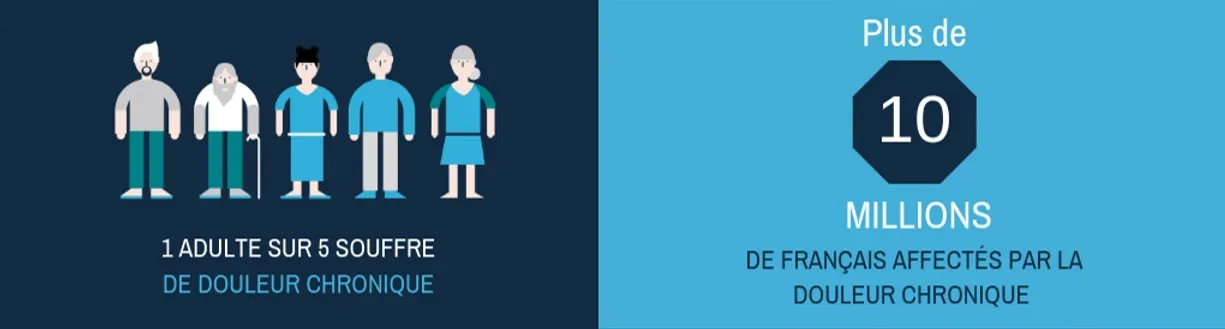
What are the characteristics of chronic pain?
1) Persistence over time
Chronic pain is defined above all by its duration. It persists well beyond the expected healing time, generally for more than three to six months. This persistence reflects a change in pain-regulation mechanisms, which no longer disappear even once the initial lesion has healed.
2) Independence from the initial stimulus
Over time, pain can become independent of its initial cause. Even in the absence of active tissue damage or an inflammatory process, pain continues to be perceived. This is explained by changes in the nervous system, which sustains the pain signal autonomously.
3) Emotional modulation
Chronic pain is strongly influenced by emotional factors. Stress, anxiety or depression can amplify the perception of pain. Conversely, certain positive psychological factors can contribute to reducing it, illustrating the close link between the brain and pain perception.
4) Central sensitisation
The central nervous system becomes progressively more sensitive. This is referred to as central sensitisation, where stimuli that would normally be non-painful are perceived as painful, or where pain is amplified disproportionately. This phenomenon plays a key role in many chronic pain conditions.
5) Functional impairment
Chronic pain has a direct impact on quality of life. It can lead to reduced physical capacity, limitation of daily activities, and an impact on sleep, work and social life. This functional impairment often contributes to maintaining the vicious cycle of pain.


How does pain become chronic?
1) Biological factors
Nerve damage or neuropathic lesions: damage to the nervous system, as in neuropathic pain (e.g. diabetic neuropathy, post-herpetic neuralgia), can lead to persistent pain.
2) Prolonged inflammation
Chronic inflammatory diseases, such as arthritis or fibromyalgia, can perpetuate pain through continuous activation of nociceptors (pain receptors).
3) Neuronal plasticity
Long-lasting changes in pain processing at the neuronal circuit level, such as hyperexcitability of spinal cord neurons or loss of natural inhibitory mechanisms, can maintain pain.
4) Psychological factors
- Stress and anxiety: chronic stress or anxiety are major factors in the transition to chronic pain.
- Depression: depression is frequently associated with chronic pain, both as a consequence and as an aggravating factor.
- Catastrophising: a tendency to exaggerate the negative consequences of pain can reinforce sensitisation pathways.
5) Social factors
Social isolation: a lack of social support can worsen chronic pain.
6) Economic factors
Unemployment or financial problems can create a vicious cycle.
7) Behavioural factors
Physical inactivity and self-medication can sustain pain.

Can osteopathy relieve chronic pain?
Manual approaches may contribute to the management of certain chronic pain conditions — the evidence is strongest for non-specific chronic low back pain — within a multimodal strategy combining suitable exercise and therapeutic education. Charbel Kortbawi, osteopath in Paris 16, consults at the Victor Hugo practice for the personalised management of chronic pain.
Research suggests that manual therapy may help modulate pain, notably through segmental spinal mechanisms and, possibly, by acting on peripheral inflammatory responses; other mechanisms remain to be clarified. These approaches form part of a global management that takes account of central sensitisation.
Movement and exercise: a cornerstone of management
Maintaining suitable physical activity is now one of the most useful levers against chronic pain. Rather than prolonged rest, a gradual return to movement helps preserve function and quality of life. Osteopathic care and therapeutic education are aimed precisely at helping each patient regain confidence in their capacity for movement.
Charbel Kortbawi: comprehensive care covering most of the chronic pain pathway
Chronic pain sits at the crossroads of biological, psychological and behavioural mechanisms. A useful consultation has to address all three within the same appointment — otherwise, care ends up scattered across several practitioners, with the risk that each intervention works in isolation from the others.
My degrees, continuing education and clinical experience allow me to offer patients comprehensive care that brings four typically separate roles together in a single consultation:
- Osteopathic treatment — clinical assessment and targeted manual work on the joint, muscle and fascial dysfunctions contributing to the pain picture.
- Chronic pain-specific management — identifying central sensitisation mechanisms and the chronification factors specific to each patient: sleep, stress, catastrophising, clinical history.
- Pain neuroscience education — explaining how the pain system works in plain terms, reducing fear of movement, and giving the patient the tools to manage symptoms day-to-day.
- Tailored physical activity programme — graded exercise plan (pacing), calibrated to current tolerance, the underlying condition and the patient's life goals.
Bringing these four roles together in a single consultation spares patients the need to see multiple specialists and delivers a level of coherence rarely achievable otherwise: every decision — which exercise, which explanation, which manual technique — draws on the same clinical understanding of the patient.
Which chronic pain syndromes are managed?
Low back pain
Chronic lumbago
Learn moreFibromyalgia
Diffuse chronic pain
Learn moreHeadaches and migraines
Chronic tension headaches
Learn moreIrritable bowel syndrome
Functional bowel disorders
Learn moreChronic pelvic pain
Pelvis and endometriosis
Learn moreJaw pain
TMJ disorders, bruxism
Learn moreMyofascial syndrome
Trigger points, deep tension
Learn moreJoint hypermobility
Pain and joint instability
Learn moreFurther reading: the placebo effect in pain management, and cervicogenic dizziness explained.
Frequently Asked Questions (FAQ)
What is chronic pain and how can an osteopath in Paris 16 help?
Chronic pain persists beyond 3 months, often in the absence of an active lesion. It involves central sensitisation mechanisms. Osteopathy acts on the mechanical components (muscular tension, joint restrictions), reducing nociceptive signals and improving quality of life.
How many sessions are needed to see an improvement with an osteopath in Paris 16?
For chronic pain, initial improvements are generally seen after 3 to 4 sessions. A complete protocol often comprises 6 to 10 sessions over 3 to 6 months, depending on the complexity and duration of the pain. Osteopathy is most effective when combined with a tailored exercise programme.
Is osteopathy reimbursed by the French social security for chronic pain?
Osteopathy is not reimbursed by the French Assurance Maladie. However, many complementary health insurance policies cover 1 to 4 sessions per year. Please check with your provider. The rate for a session at the Victor Hugo practice in Paris 16 is available on the contact page.
Which chronic pain conditions are most commonly treated by an osteopath in Paris 16?
The conditions most frequently managed are: chronic low back pain, fibromyalgia, chronic headaches, irritable bowel syndrome and myofascial syndrome. A personalised approach is established for each patient.
Scientific references
- Qaseem A, et al. Noninvasive Treatments for Acute, Subacute, and Chronic Low Back Pain: A Clinical Practice Guideline From the American College of Physicians. Ann Intern Med. 2017;166(7):514-530. doi.org/10.7326/M16-2367
- Geneen LJ, et al. Physical activity and exercise for chronic pain in adults: an overview of Cochrane Reviews. Cochrane Database Syst Rev. 2017;4(4):CD011279. doi.org/10.1002/14651858.CD011279.pub3
- Franke H, Franke JD, Fryer G. Osteopathic manipulative treatment for nonspecific low back pain: a systematic review and meta-analysis. BMC Musculoskelet Disord. 2014;15:286. doi.org/10.1186/1471-2474-15-286
- Gevers-Montoro C, et al. Neurophysiological mechanisms of chiropractic spinal manipulation for spine pain. Eur J Pain. 2021;25(7):1429-1448. doi.org/10.1002/ejp.1773