Tennis elbow: osteopathic treatment in Paris 16
Treatment of lateral epicondylitis
Benefits of manual therapy and osteopathy
What is epicondylitis?
Epicondylitis is a tendinopathy presenting as pain on the outer or inner side of the elbow, particularly during repetitive gripping and wrist flexion-extension movements. It can be lateral — commonly known as "tennis elbow" — or medial ("golfer's elbow").
Epicondylitis is principally caused by overload or microtrauma of the tendons of the muscles that insert on the lateral epicondyle. This pathology often affects people in manual occupations and athletes, particularly those practising activities that place demand on the forearm and wrist.
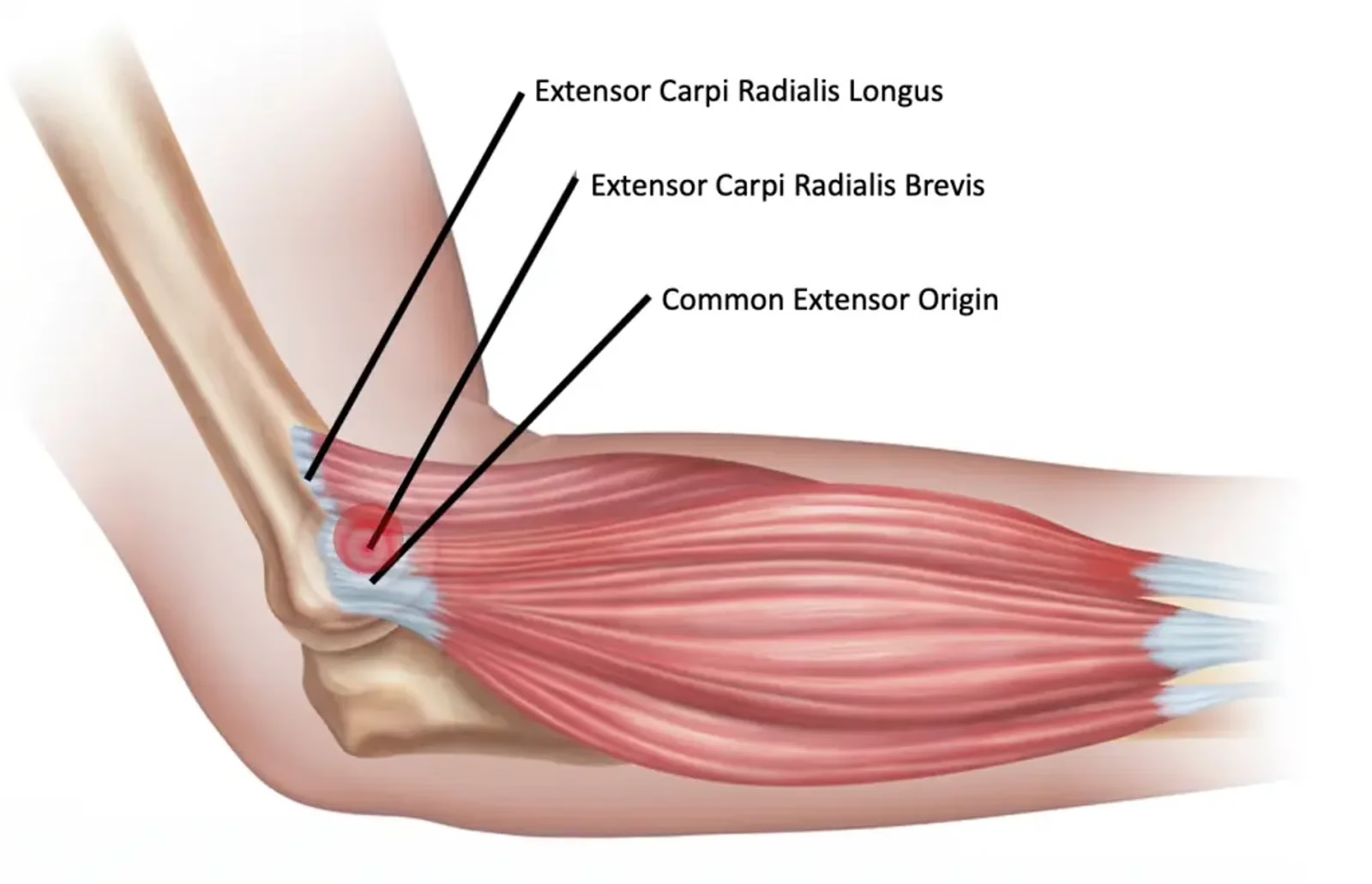
Symptoms of lateral epicondylitis of the elbow
Common symptoms include:
- Pain localised over the lateral epicondyle of the elbow,
- Muscular weakness in the forearm,
- Difficulty carrying out simple tasks such as lifting objects or turning a door handle.
These symptoms may worsen over time if no management is implemented.
Management of lateral epicondylitis
Scientific recommendations from various recently published literature reviews and meta-analyses:
- Eccentric exercises — Therapeutic exercises are crucial for strengthening the forearm muscles and improving tendon suppleness. Eccentric exercises, which involve lengthening the muscles under tension, have proved particularly beneficial in stimulating tendon repair and reducing pain. Eccentric exercises, combined with specific stretches, significantly improve symptoms and forearm function in patients with lateral epicondylitis.
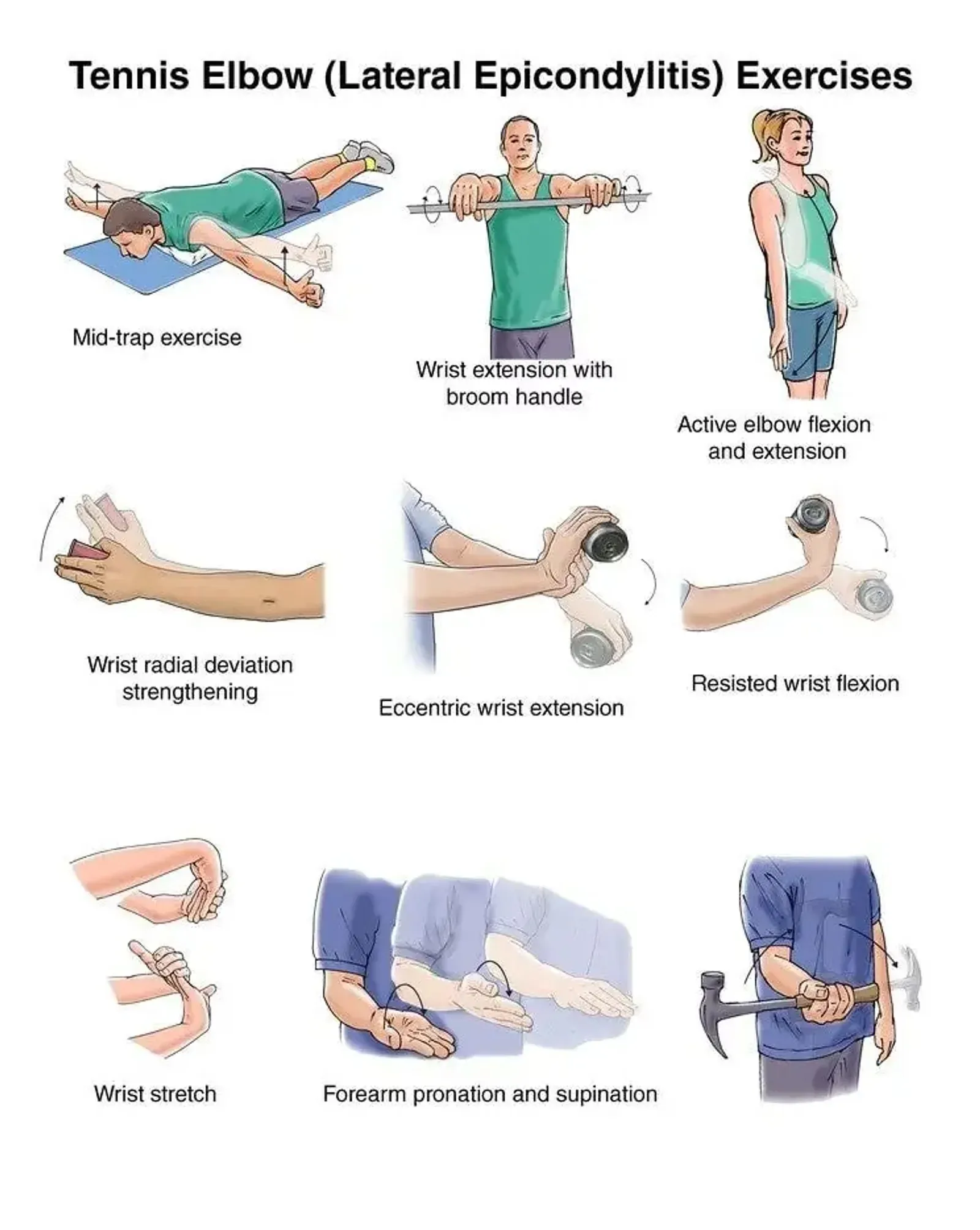
- Manual therapy and osteopathy — Manual therapy is used to reduce pain and improve joint mobility. It includes passive mobilisation and manipulation techniques for joints and soft tissues. Osteopathy and manual therapy play an essential role in this approach by targeting restrictions of mobility and muscular tensions in the elbow, shoulder and wrist region.
- Shock-wave therapy — Extracorporeal shock-wave therapy (ESWT) is a non-invasive method often used for chronic tendon pathologies, including chronic lateral epicondylitis. This technique uses acoustic waves to stimulate tissue repair and relieve pain. Shock-wave therapy may serve as an adjunct to exercise and manual therapy in chronic cases of tennis elbow.
- Injection therapy — Corticosteroid injections are sometimes used to reduce pain in the short term, but they are controversial given the risk of recurrence and long-term aggravation of tendon lesions. Alternatives such as platelet-rich plasma (PRP) injections are under evaluation in clinical studies. PRP injections, rich in growth factors, may stimulate tissue healing, though evidence of their effectiveness remains mixed.
- Surgery — In cases where conservative treatments fail, surgical intervention may be considered. Surgery generally aims to remove damaged tissue and stimulate tendon regeneration. This approach is nevertheless reserved for severe cases refractory to other treatments, and is indicated only after several months of conservative follow-up.
Conclusion
Lateral epicondylitis of the elbow is a common pathology that can greatly affect patients' quality of life. Conservative approaches — such as exercise and manual therapy — have proved effective in the majority of cases.
- Ma K-L, Wang H-Q. Management of Lateral Epicondylitis: A Narrative Literature Review. Pain Research Management, 2020;
- Lenoir H, Mares O, Carlier Y. Management of Lateral Epicondylitis. Orthopaedics & Traumatology: Surgery & Research, 2019;105(8S).
- Duncan J, Duncan R, Bansal S, Davenport D, Hacker A. Lateral epicondylitis: the condition and current management strategies. Br J Hosp Med (Lond). 2019 Nov 2;80(11):647-651.
Frequently asked questions (FAQ)
Can osteopathy treat tennis elbow (epicondylitis)?
Yes, osteopathy is effective for epicondylitis. It addresses joint dysfunctions of the elbow, shoulder and wrist that overload the extensor tendons, and prescribes eccentric exercises to promote tendon healing.
How many sessions are needed to treat tennis elbow?
An acute elbow tendinopathy usually responds in 3 to 5 osteopathy sessions, combined with eccentric exercises. Chronic cases (epicondylitis present for more than 6 months) may require 6 to 10 sessions and sometimes PRP injections.
Should you stop sport or work if you have epicondylitis?
Not necessarily. A temporary reduction in load is often sufficient. An epicondylitis brace (counter-force brace) can allow you to continue certain activities by relieving the tendons. Your osteopath will guide you on optimal management.
What is the difference between tennis elbow and golfer's elbow?
Tennis elbow (lateral epicondylitis) affects the extensor tendons on the outer side of the elbow. Golfer's elbow (medial epicondylitis) affects the flexor tendons on the inner side. Both conditions are treated with osteopathy and eccentric exercises.