Cervicogenic headache: diagnosis and osteopathic treatment
What is cervicogenic headache?
A headache originating from the cervical spine
Cervicogenic headache (or CH) is a type of headache caused by a dysfunction of the cervical structures (vertebrae, intervertebral discs, muscles, joints). Although described as early as the 1920s, it was not truly recognised until the end of the 20th century thanks to the work of Professor Sjaastad.
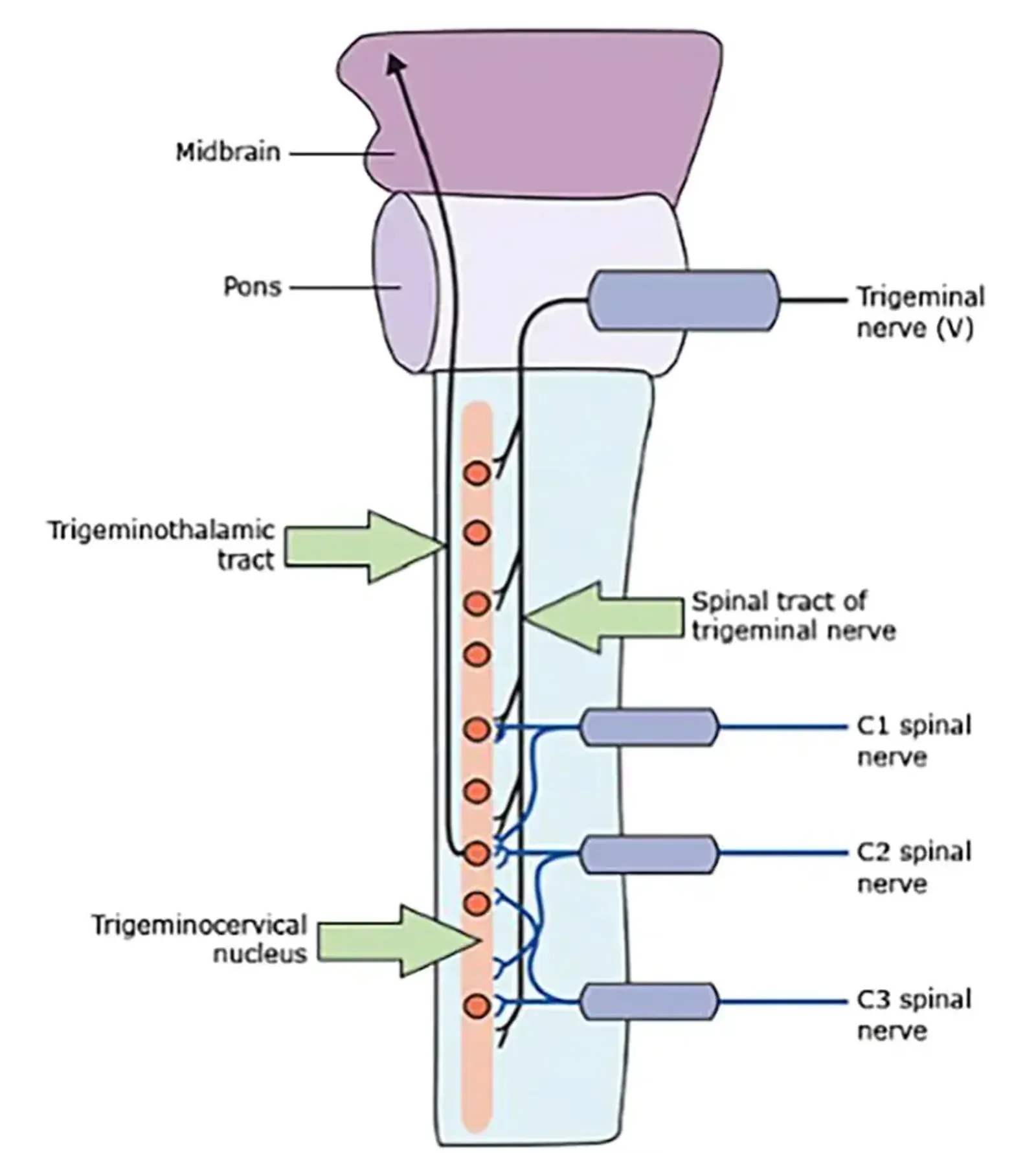
This particular head pain arises from the convergence between the cervical nerves and the trigeminal nerve at the level of the brainstem, a phenomenon known as trigeminocervical convergence. This explains why the symptoms may resemble a migraine, sometimes leading to diagnostic errors.
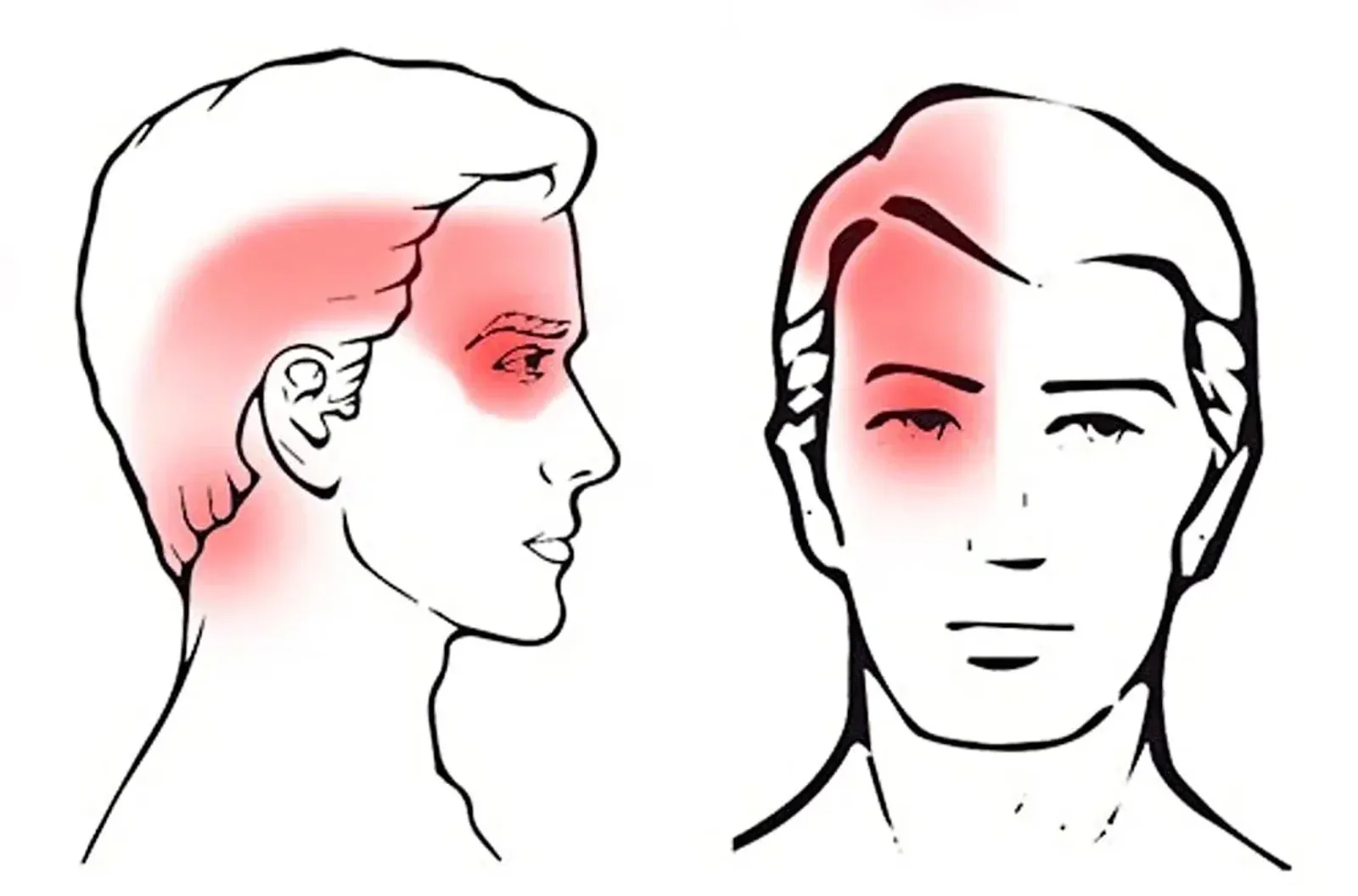
Characteristic symptoms
- A unilateral and fixed pain, often located at the back of the skull, sometimes radiating towards the forehead or the eye.
- A reduction of cervical mobility, particularly in rotation.
- A pain that worsens with certain movements of the neck or a prolonged posture.
- A tenderness on palpation of the muscles and joints of the neck, particularly at the C1-C2 level.
- Sometimes, associated symptoms similar to migraine: nausea, photophobia, phonophobia, cervicogenic dizziness.
The duration of episodes is highly variable, from a few hours to several days, and the frequency can range from a few attacks per year to several per week.
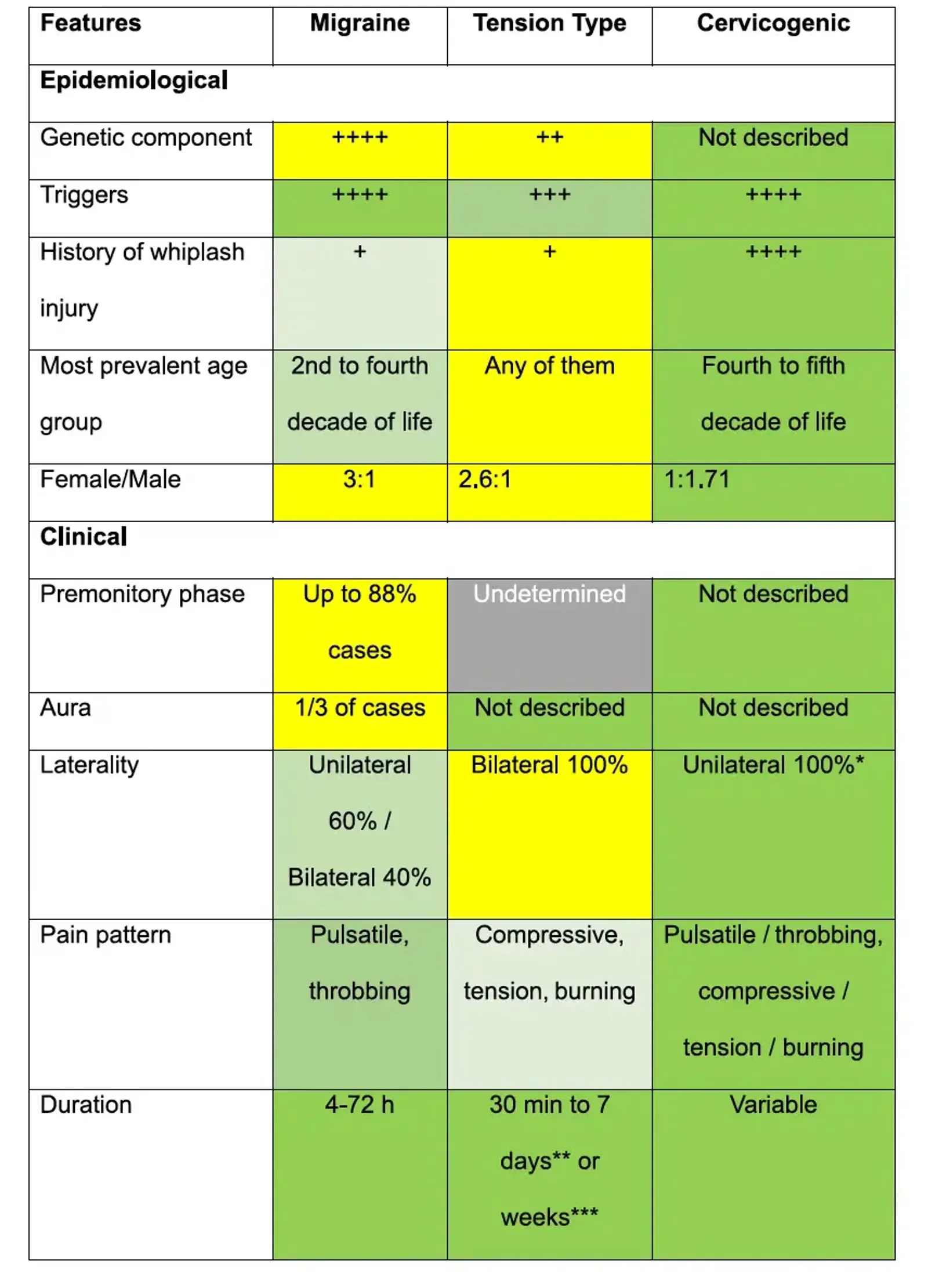
Differential diagnosis
- A targeted physical examination of the cervical spine.
- The cervical flexion-rotation test (Flexion Rotation Test), which is often limited in CH.
- Clinical criteria defined by the International Headache Society (IHS) and the CHISG (Cervicogenic Headache International Study Group), including unilateral pain, loss of cervical mobility and triggering by local pressures.
- Improvement of symptoms after anaesthetic block of the cervical nerves, in particular C2-C3.
Frequent causes of cervical-origin neck pain.
- Cervical trauma (whiplash, fall…)
- Cervical osteoarthritis
- Postural disorders (screen work, postural stress)
- Articular dysfunctions at the C2-C3 or C1-C2 level
- Cervical musculoskeletal disorders
Therapeutic approach and management
The treatment of cervicogenic headache relies on multimodal management:
1. Osteopathy and physiotherapy
A scientific article published in May 2025 in Frontiers in Neurology, entitled "Comparative safety and efficacy of manual therapy interventions for cervicogenic headache: a systematic review and network meta-analysis", compares the efficacy of different manual therapy techniques in the treatment of cervicogenic headaches, a disorder for which these approaches remain among the most effective and least invasive.
Articular mobilisation techniques prove particularly effective in reducing pain, improving cervical mobility and decreasing functional disability. These benefits are both significant and lasting over time. Cervical vertebral manipulation, for its part, appears to be the best-performing intervention in the short term for relieving pain and restoring function, provided it is carried out by an experienced professional. Gentle mobilisations and massage offer safe options, notably for patients presenting contraindications to manipulation.
In summary, osteopathy and manual therapy have their full place in the management of cervicogenic headaches, contributing to improving cervical mobility, rebalancing muscular tensions and relieving pain. Several studies show that exercises targeting the deep muscles of the neck, combined with mobilisation techniques, can durably reduce the intensity and frequency of headaches.
2. Anaesthetic block
A diagnostic test, but also a therapeutic option, consists of the infiltration of lidocaine or corticosteroids at the level of the cervical joints or the greater occipital nerve.
3. Pulsed radiofrequency and surgery
In the case of failure of conservative treatments, techniques such as radiofrequency at the level of the cervical nerves or decompression surgery may be considered in highly targeted cases.
Conclusion
Cervicogenic headache is an underestimated cause of chronic headaches. A precise clinical examination, combined with manual and functional management, often provides lasting relief. As an osteopath specialising in chronic pain and cervical pathologies, I offer you an individualised approach, integrating current recommendations based on scientific data.
French Diploma of Osteopathy (DO)
Frequently asked questions (FAQ)
What is a cervicogenic headache?
Cervicogenic headache is a type of headache whose origin is in the cervical spine. It is often unilateral, aggravated by movements of the neck, and may be accompanied by cervical stiffness. It represents approximately 15-20% of chronic headaches.
Is osteopathy effective for cervicogenic headaches?
Yes, osteopathy is one of the best-documented treatments for cervicogenic headaches. Cervical manipulations reduce the frequency and intensity of attacks according to several randomised clinical studies.
How can a migraine be distinguished from a cervicogenic headache?
Cervicogenic headache is triggered by movements of the neck and originates at the back of the head. Migraine is often pulsating, associated with nausea and sensitivity to light. A clinical examination by your osteopath or physician allows the two to be differentiated.
How many sessions to treat cervicogenic headaches?
Most patients feel an improvement after 4 to 6 sessions of osteopathy. Chronic cases may require longer follow-up associated with specific cervical exercises.