Office posture : prevent back pain
What is the correct posture at the office to reduce back pain?
Spending long hours sitting at a desk can have negative repercussions on health, in particular back pain, muscular tensions and even headaches. However, an adequate posture can help prevent these problems. According to scientific studies and medical recommendations, here are the essential points to follow for optimal office posture.
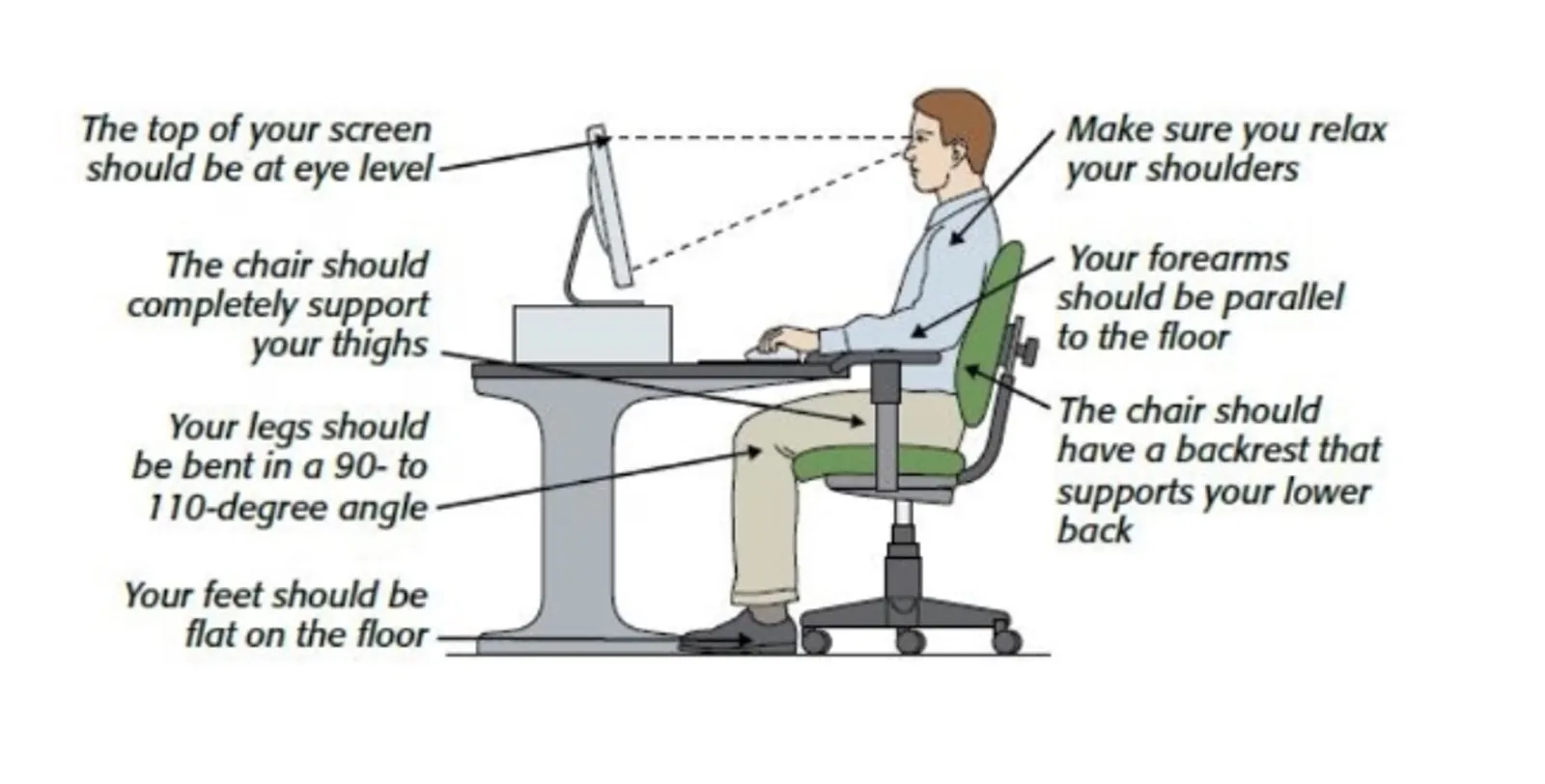
Criteria to adopt to improve your office posture
One of the most important elements for good office posture is to maintain the spine in a neutral position, i.e., natural and without twisting. The spine should retain its natural S-shaped curvatures, with a slight inward curve at the lower back (lumbar lordosis) and a slight outward curve at the shoulders (thoracic kyphosis).
According to the American Medical Association, poor posture that distorts these curvatures can lead to chronic pain in the lower back.
Lumbar support is crucial to prevent fatigue of the lower back muscles. A good office chair should ideally include adjustable lumbar support. This support helps maintain the natural curvature of the spine, thereby reducing pressure on the intervertebral discs and surrounding muscles. A lumbar cushion may also be used.
Research conducted by the French National Research and Safety Institute for the prevention of occupational accidents and diseases (INRS) has shown that good lumbar support significantly reduces low back pain related to prolonged sitting.
A study published in the Journal of Applied Ergonomics revealed that this position improves blood circulation in the lower limbs, reducing the risk of venous disorders such as varicose veins.
The positioning of the computer screen and keyboard is essential to prevent tensions in the neck and shoulders. The screen should be at eye level, or slightly below, at a distance of approximately 50 to 70 cm from the eyes. The gaze should naturally fall at the centre or slightly below the top of the screen.
As for the keyboard, it should be placed at elbow height, with the arms forming an angle of 90 to 100 degrees. It is recommended to use a wrist rest to avoid excessive flexion of the wrists, which could lead to disorders such as carpal tunnel syndrome.
Even adopting a perfect posture, remaining motionless for long periods is harmful. Studies, such as those published by the British Journal of Sports Medicine, have shown that alternating between sitting and standing periods promotes better musculoskeletal and cardiovascular health.
It is advisable to stand up and move every 30 to 60 minutes to prevent the harmful effects of sedentary behaviour. Simple exercises, such as stretches or a short walk, can help reduce tensions and improve blood circulation.
Ergonomic workstation arrangement is another key factor. The World Health Organization (WHO) and many ergonomics experts recommend adapting the environment to the user's physical needs rather than the other way around. This includes the use of adjustable chairs and desks, as well as accessories such as footrests or articulated monitor arms.
Conclusion
Correct office posture rests on several factors, from the position of the spine to that of the feet, as well as the arrangement of the screen and keyboard. Following ergonomic recommendations derived from scientific and medical research not only helps prevent long-term pain and injury, but also improves concentration and productivity. Finally, it is essential to remember that ideal posture must not be static: varying positions and incorporating regular breaks are essential to preserve your health at work.
Frequently asked questions (FAQ)
What is the correct posture for seated office work?
The ideal office posture: feet flat on the floor, knees at 90°, back supported by the backrest, elbows at 90° on the armrests, screen at eye level. This position should alternate with standing breaks every 45 minutes.
Can office back pain be avoided?
Yes, with adapted ergonomics, regular breaks and core strengthening exercises. Osteopathy treats accumulated tensions and advises you on postural habits to adopt according to your morphology and your workstation.
Does osteopathy help with pain related to office work?
Yes, osteopathy is particularly effective for neck, upper back and lower back pain related to sedentary work. It treats postural compensations and muscular tensions accumulated during prolonged work sessions.
Do you need an ergonomic chair to avoid back pain?
An ergonomic chair helps but is not enough on its own. Posture, breaks and movement remain decisive. Your osteopath can evaluate your office setup and give you personalised advice during your session.