Prevent back pain : posture and exercises
Prevent back pain : posture and exercises | Osteopath Paris 16 Recommendations from your osteopath.
Back pain is a common condition that can often be avoided thanks to healthy daily habits. Adopting good posture, strengthening the trunk muscles and maintaining a good lifestyle are some of the recognised practices for reducing the risk of back pain. Here is advice grounded in current knowledge in biomechanics, physical medicine and ergonomics.
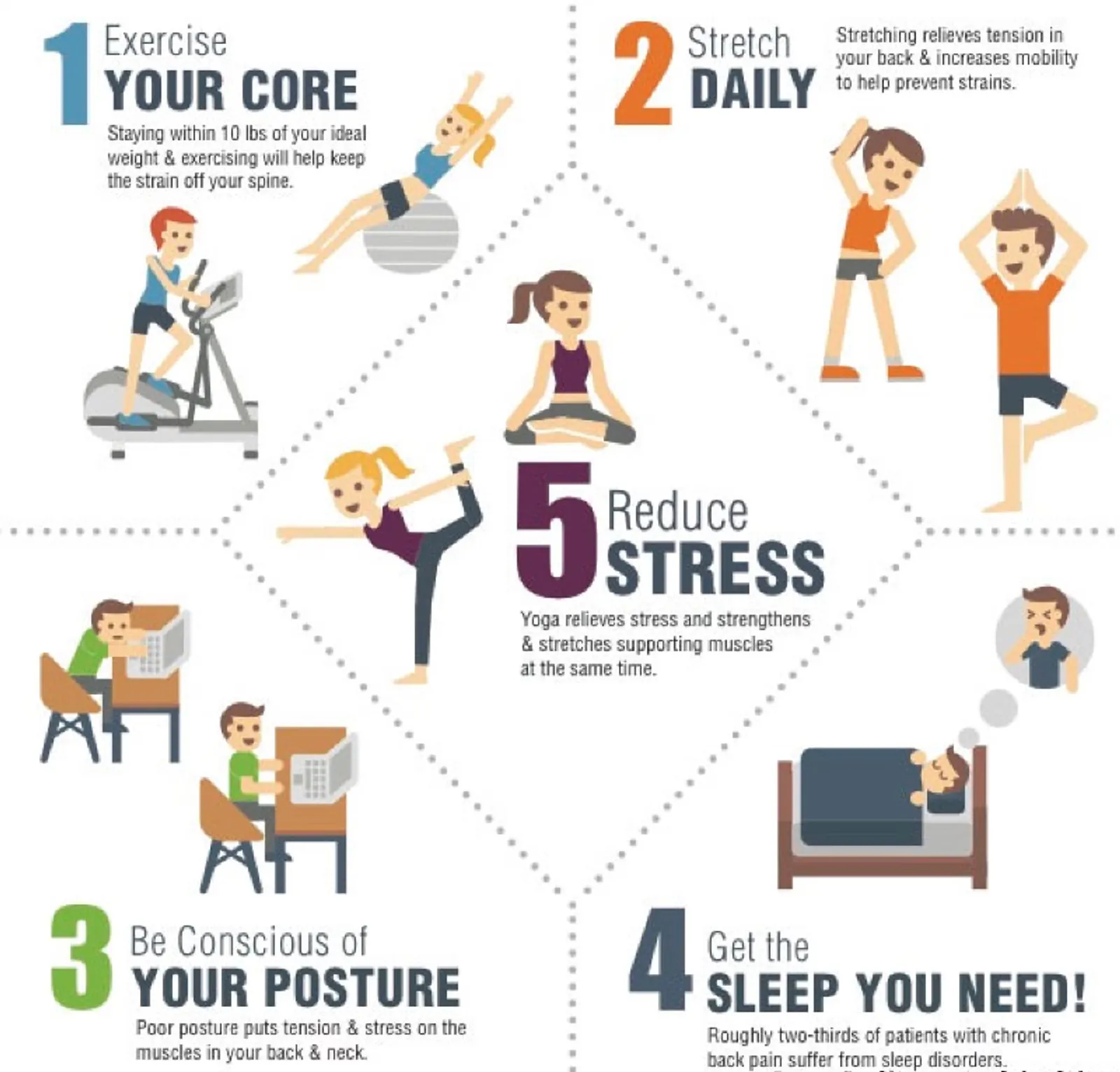
- Maintain an adequate posture — An appropriate posture distributes body weight correctly and reduces pressure on the spine. A good posture for seated work includes feet flat on the floor, knees at a right angle, and adequate support for the lower back. In this position, the shoulders should be relaxed, which helps limit muscular tension in the upper back. A recent study by Christensen et al., 2023, showed that slumped office posture increases neck and shoulder pain in healthy subjects.
- Strengthen the trunk muscles — Abdominal and back strengthening exercises are recommended to support the spine. Core exercises, for example, engage the deep muscles of the trunk and allow better spinal stability, thus limiting microtraumas.
- Learn the correct lifting techniques — Lifting objects by bending the knees and keeping the back straight helps reduce pressure on the lumbar discs. It is advisable to bring the object close to the body to avoid excessively loading the back muscles. Avoid bending using only your back, as this increases the risk of injury.
- Practise regular physical activity — Regular moderate physical activities help maintain the flexibility and strength of the spine. These activities also help improve blood circulation in the back muscles, promoting their recovery and reducing tensions. In addition, stretching exercises targeting the lower back and legs improve mobility and prevent stiffness. A study published by Steffens et al., 2016, indicates that exercise alone, or combined with patient education, is effective in preventing low back pain (LBP).
- Manage stress and ensure good sleep quality — Stress and lack of sleep often increase pain perception. Stress can cause muscular tensions, particularly in the back, while insufficient sleep limits muscular recovery. Practising relaxation techniques such as meditation or yoga and ensuring quality sleep can help limit the impact of stress on spinal pain.
- Avoid weight gain — Excess weight can exert additional pressure on the spine and joints, thereby increasing the risk of pain. Weight management through a balanced diet and regular physical activity is therefore crucial for preventing back pain. A study published by Lee et al., 2021, shows that excess weight is linked to an increase in the chronicity of back pain.
Frequently asked questions (FAQ)
How to prevent back pain in daily life?
Adopt an ergonomic posture at the office, avoid prolonged static positions by taking breaks every 45 minutes, strengthen your trunk muscles and consult an osteopath at the first signs of tension to prevent chronification.
Is osteopathy effective in preventing back pain?
Yes, preventive osteopathy detects and corrects joint tensions before they become painful. An annual check-up is recommended for at-risk individuals (sedentary work, intensive sport, history of lumbar pain).
Which exercises help prevent back pain?
Core strengthening (plank, glute bridge), hamstring and psoas stretches, and regular walking are the best preventive exercises. Your osteopath can prescribe a programme adapted to your body type.
Can stress cause back pain?
Yes, chronic stress increases para-vertebral muscular tensions and lowers the pain perception threshold. Stress management (sophrology, meditation, physical activity) is therefore a key element in preventing low back pain.