Sciatica relief with osteopathy and manual therapy
What role does osteopathy play in the management of sciatica?
Sciatica can have a major impact on daily activities. When pain radiates from the lower back or buttock into the leg, certain simple movements become difficult: sitting, walking for long periods, bending over, or taking part in physical activity.
In most cases, initial management is conservative. Current recommendations favour, in particular, maintaining suitable physical activity, patient information, therapeutic education and, depending on the situation, various non-pharmacological approaches.
Osteopathy and manual therapy fit within this strategy. Their aim is to reduce symptoms, improve functional capacity, and help the patient gradually return to their usual activities.
What happens during a consultation?
The consultation begins with a detailed history and a clinical examination. The practitioner looks at the onset of the symptoms, how they have evolved, the factors that aggravate or relieve the pain, and their impact on daily activities.
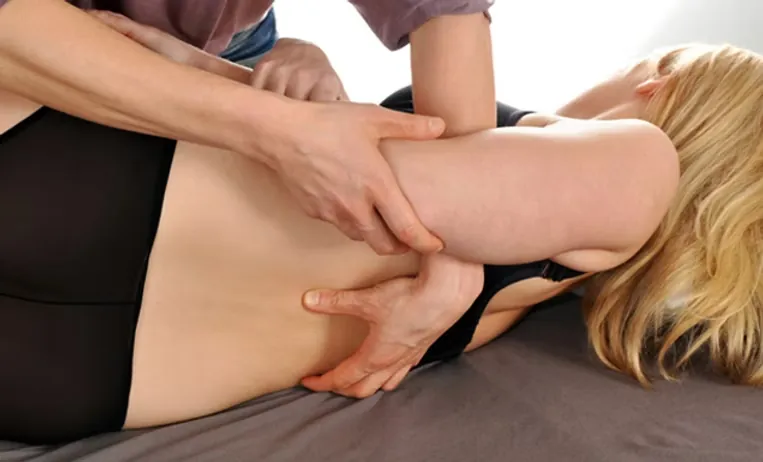
The clinical examination then makes it possible to assess:
- the mobility of the lumbar spine;
- the mobility of the hips and pelvis;
- the possible presence of neurological signs;
- muscular strength;
- sensation;
- the movements that reproduce the symptoms.
This step is essential in order to confirm the diagnostic hypothesis and to rule out situations requiring specific medical management.
When manual care is indicated, various techniques may be used according to the clinical picture. They can target the joints, the muscles or the soft tissues in order to improve mobility, reduce pain, and ease the return to activity.
What benefits can be expected?
The expected benefits vary according to the cause of the sciatica, how long it has lasted, and the characteristics specific to each patient. The aim of treatment is not only to reduce pain, but also to support the return to daily and physical activities.
Care can notably contribute to:
- reducing the intensity of the pain;
- easing certain associated muscular tensions;
- improving the mobility of the spine and lower limbs;
- restoring certain functional capacities;
- supporting the gradual resumption of daily and occupational activities;
- improving understanding of the problem and how it evolves.
Osteopathy and manual therapy are generally integrated into broader care that includes physical-activity advice, suitable exercises — for example back stretches and back strengthening — and individualised recommendations.
Movement remains a central element of treatment
Faced with pain, it is common to greatly reduce activity or to avoid certain movements. Yet in most cases, maintaining suitable physical activity is one of the most important elements of recovery. International recommendations on low back pain and radicular pain generally encourage continuing activities as far as possible.
The aim of care is therefore also to help the patient gradually regain confidence in their capacity for movement and to resume their activities in a way suited to their clinical condition.
The importance of an accurate diagnosis
Not all pain radiating into the leg corresponds to true sciatica related to irritation of a lumbar nerve root. Some conditions can produce similar symptoms. This is notably the case for deep gluteal syndrome, formerly called piriformis syndrome, or for certain referred pains arising from the lumbar spine or pelvis.
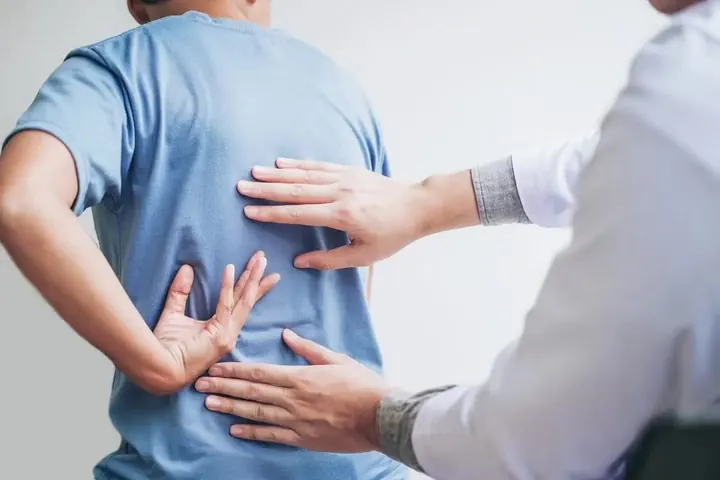
In our osteopathic practice at the Cabinet Victor Hugo in Paris 16, it is not uncommon to see patients convinced they have sciatica when the origin of their symptoms is different. To go further, see our article on the differential diagnoses of sciatica.
Precisely identifying the pain mechanism is an essential step in management. It makes it possible to direct treatment, adapt the advice and, when necessary, refer the patient to another healthcare professional.
Integrated and safe care
Osteopathy and manual therapy do not replace medical assessment when it is needed. During the examination, the practitioner systematically looks for the warning signs that might justify further investigations or a specialist medical opinion.
When the situation calls for it, care is provided in coordination with the patient's general practitioner or the other professionals involved in their follow-up.
Frequently asked questions (FAQ)
Can osteopathy relieve sciatica?
Yes. Osteopathy and manual therapy are part of the conservative management of sciatica. The techniques used (joint mobilisations, soft-tissue and muscular work) aim to reduce symptoms, improve functional capacity and ease the return to daily activities. They complement suitable physical activity and patient education.
How many sessions are needed to relieve sciatica?
The number of sessions varies according to the cause of the sciatica, how long it has lasted, and the characteristics specific to each patient. Most patients notice progressive improvement over a few sessions, with a gradual return to activities. Care is personalised and reassessed at each consultation.
Should I rest in case of sciatica?
No, prolonged rest is not recommended. International recommendations on the contrary encourage maintaining suitable physical activity. Movement remains a central element of treatment: it supports recovery, confidence in one's capacity for movement and the return to daily and occupational activities.
When should I see a doctor rather than an osteopath?
If warning signs are present (difficulty passing urine or controlling the bowels, loss of perineal sensation, significant or progressive muscular weakness, pain after major injury, associated fever), an urgent medical consultation is needed. The osteopath systematically looks for these signs during the examination and coordinates care with the patient's general practitioner when necessary.
References
- Jensen RK, Kongsted A, Kjaer P, Koes B. Diagnosis and treatment of sciatica. BMJ. 2019;367:l6273. doi.org/10.1136/bmj.l6273
- de Campos TF. Low back pain and sciatica in over 16s: assessment and management NICE Guideline [NG59]. J Physiother. 2017;63(2):120. doi.org/10.1016/j.jphys.2017.02.012
- Leininger B, Bronfort G, Evans R, Reiter T. Spinal manipulation or mobilization for radiculopathy: a systematic review. Phys Med Rehabil Clin N Am. 2011;22(1):105-125. doi.org/10.1016/j.pmr.2010.11.002
- Ghasabmahaleh SH, Rezasoltani Z, Dadarkhah A, Hamidipanah S, Mofrad RK, Najafi S. Spinal Manipulation for Subacute and Chronic Lumbar Radiculopathy: A Randomized Controlled Trial. Am J Med. 2021;134(1):135-141. doi.org/10.1016/j.amjmed.2020.08.005
- Franke H, Franke JD, Fryer G. Osteopathic manipulative treatment for nonspecific low back pain: a systematic review and meta-analysis. BMC Musculoskelet Disord. 2014;15:286. doi.org/10.1186/1471-2474-15-286
- Gevers-Montoro C, Provencher B, Descarreaux M, Ortega de Mues A, Piché M. Neurophysiological mechanisms of chiropractic spinal manipulation for spine pain. Eur J Pain. 2021;25(7):1429-1448. doi.org/10.1002/ejp.1773
This article offers general information and does not replace a personalised consultation with a healthcare professional.